


2026-09-10
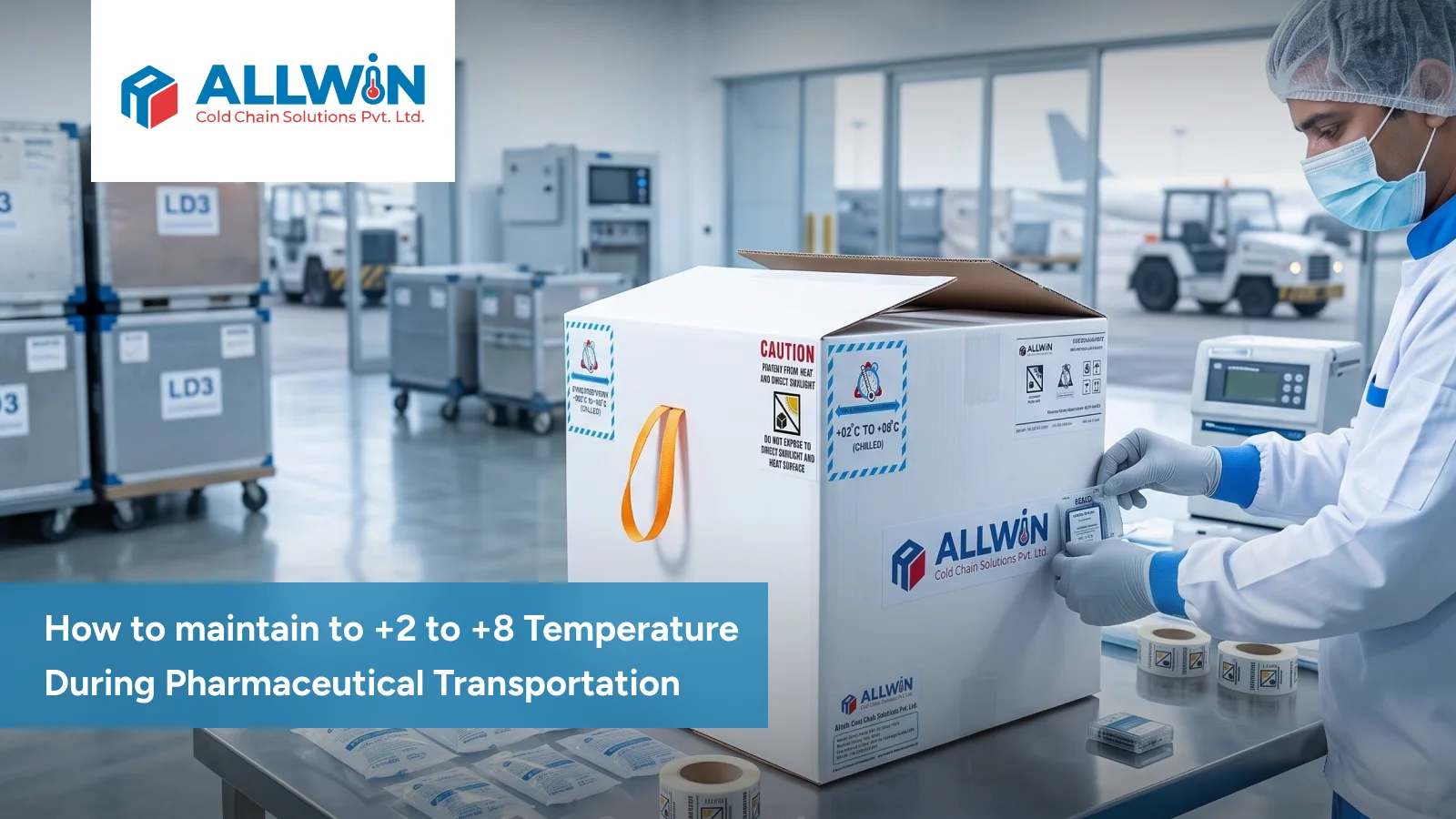
Pharmaceutical transportation cold chain for medicinal products requiring temperature control during pharmaceutical logistics. Medicines that require +2°C to +8°C must not only be cooled but should also be protected from hot weather or low temperatures. Reusable cold chain boxes can provide a practical packaging option for repeated temperature-controlled shipments when properly conditioned and packed. With the right packaging, properly conditioned cooling media, proper packing, appropriate handling, and temperature monitoring, companies can depend on efficient pharmaceutical cold chain management. Transit time and ambient conditions are factors that must also be taken into account; delays, transfers, and delivery all impact the state of the shipment.
+2C to +8C is the temperature range that is needed for certain pharmaceutical products that are sensitive to temperature variations. How close the medicine must stay within the required range depends on the medicine and the temperature limits given in the storage instructions. The information should guide how the shipment is planned.
If a shipment must be kept between +2 C and +8 C it is important to keep it from freezing and, from becoming too warm. Keeping the shipment within this range during transport is essential. Maintaining this range needs packaging, cooled media and careful handling. Temperature monitoring helps identify deviations, during transit and keeps records that prove the required storage conditions.
The medicines that are sensitive to temperature can suffer if they are exposed above or below their specified parameters. Too much heat can have an impact on product quality, as can temperatures that are too cold.
Maintaining the required range is an important part of the cold chain for medicines. Packaging, cooling medium, handling, monitoring, and logistics planning all help to maintain appropriate conditions throughout the entire transit.
A temperature-controlled shipment must be viewed as a system. Merely depending on the insulation may not be enough when the conditions in transit change. Conditioned cooling media cooling media that is properly conditioned suitable packaging configuration packaging configuration that is suitable and temperature monitoring can help reduce the risk of temperature excursions. Temperature excursions are something to avoid. Transit duration, transit duration, loading and unloading conditions, conditions for loading and unloading and exposure to temperatures should also be considered when planning pharmaceutical shipments. Pharmaceutical shipments need planning.
Typical insulation provides a barrier to external heat transfer into the shipment. The cooling media helps maintain the desired internal temperature. The actual performance of the container will depend on factors such as the type of container, amount of product, amount of cooling media, environmental temperature, and duration of the shipment.
Choosing the appropriate container type and insulation depends on the purpose of the shipment and is based on the entire packaging configuration meeting the actual needs of the customers' transportation conditions. For pharmaceutical shipments, the packaging should also be selected according to the product's specified temperature range, expected transit time, and handling conditions. Temperature monitoring can help verify that the required conditions are maintained throughout transportation.
Temperature stability can be affected by different things in the environment and, during operations. Finding out about these problems before shipping helps companies create ways to transport their products. Temperature data loggers can also help monitor temperature conditions during transit and identify deviations that may affect the shipment.
Maintaining the required range begins before the shipment leaves the facility. Businesses should establish a consistent process covering packaging, cooling media preparation, packing, handling, and monitoring.
Packaging selections should consider product needs and requirements, shipment volume, length of transit time, and nature of ambient environment. When evaluating temperature controlled pharma packaging, businesses should consider the complete configuration rather than the container alone.
Media for cooling should be suitable for the temperatures involved and the product's packaging design. Cooling media should be conditioned according to the correct procedure prior to being packed.
Cooling media should be within the temperature range and designed in accordance with the relevant specifications. Poorly conditioned cooling media can impact stability.
A shipment travelling through uncontrolled environments should be kept as short as possible. Unnecessary handling via loading, unloading or transhipment points should be minimised.
A data logger pharma transport solution can help businesses determine whether the required temperature range was maintained and support investigation when an excursion occurs.
Insulated packaging acts as a barrier against surrounding conditions by minimizing heat transfer and can work with cool packs as part of the ideal solution to facilitate a pharmaceutical cold chain.
Its effectiveness is influenced by aspects including its insulation material, container shape, contents and how they are packed, cooling media, transport conditions, and surrounding temperature. When considering the most appropriate pharmaceutical cold chain packaging all the factors should be considered together.
The packaging configuration should also be matched to the expected shipment duration and product temperature requirements. Properly conditioned cooling media and correct placement within the container can help maintain a more stable internal environment. Before regular use, packaging performance should be evaluated under conditions that reflect the expected transportation route and handling environment.
You should choose the right container based on the product, logistics process, and temperature requirement, not necessarily size or price. Transit time, ambient conditions, cooling media, handling, and packaging configuration need to be taken into account.
The prescribed temperature range of the medicine should be the starting point for selecting packaging. The system has to operate at the appropriate temperature ranges without overheating or overcooling the drug.
Consider the entire product path, including lead times, cycle times, and any potential delays. Protect the product correctly during packaging for a realistic shipping duration.
Expected environmental temperatures can influence packaging performance. High ambient temperatures may place additional demand on the insulation and cooling system.
Cooling media should be compatible with the required temperature range and packaging configuration. Its conditioning, quantity, and placement can influence the temperature profile inside the shipment.
Container dimensions, product arrangement, insulation, and cooling-media placement should work together. An unsuitable arrangement can reduce performance even when individual components are appropriate.
Businesses handling regular shipments may consider reusable solutions when they suit their operating model. Reusable cold chain boxes can support multiple-use applications and may be available with or without chill pads.
A supplier should provide suitable product information and technical guidance for the intended application. Packaging, cooling media, testing, and transportation requirements should be considered together when selecting a solution.
Temperature data loggers capture temperature at regular intervals and serve as an indicator of what the transport conditions were like. Loggers may be placed within insulated shippers and other temperature-controlled containers.
In pharma cold chain logistics, monitoring enables the visibility of real-time shipping conditions rather than anticipated packaging. The stored data may be used to determine at what time during the trip there was a temperature deviation and to investigate temperature excursions.
Preventing temperature excursions requires controls across the complete transportation process. Packaging preparation, cooling media, packing, handling, and monitoring should all be addressed before dispatch.
Validate Packaging Configuration: Packaging should be evaluated under conditions representative of its intended application. Testing helps establish whether the selected configuration provides appropriate temperature protection for the expected shipment duration.
Condition Cooling Media Correctly: Cooling media should be conditioned according to the established packing procedure. Consistent preparation helps reduce temperature variation and supports predictable packaging performance.
Standardise Packing: A defined packing configuration ensures that products and cooling components are positioned consistently. Standard procedures also reduce the possibility of preparation errors between shipments.
Reduce Handling Exposure: Shipments should not remain unnecessarily exposed to uncontrolled temperatures during loading, transfers, or delivery. Efficient coordination can reduce the time packages spend outside controlled environments.
Monitor Continuously: Temperature monitoring creates a record of conditions during transit. If an excursion occurs, the data can help establish when the temperature changed and support the appropriate assessment.
Pharmaceutical transportation requires suitable controls for temperature-sensitive products, including appropriate storage, transportation, monitoring, documentation, and handling procedures. Effective cold chain in pharmaceutical industry practices should reflect the requirements applicable to the specific product and distribution process. Pharmaceutical Cold Chain Management helps manage these controls in areas like storage, transportation, monitoring and handling. It makes sure the right conditions are kept through the distribution process.
Requirements can vary according to the product, market, and transportation route. Businesses should therefore establish procedures according to relevant requirements rather than applying one process to every shipment.
There is no set duration of shipping time for any one product or any packaging system. The retention time is based on the actual packaging configuration, the type of cooling medium, the load, and the ambient conditions.
The expected duration is specific for each configuration. Consider delays and handling conditions as well as the required hold time.
Packaging systems need to be chosen and checked for the planned transportation time and the weather conditions that might happen. The shipping plan should also think about putting the items on the vehicle, taking them off moving them between vehicles and any possible delays. Temperature data loggers can show if the temperature stayed between +2°C and +8 °C during the trip and find any times when the temperature went outside this range for more checking.
Allwin Cold Chain offers cold chain packaging solutions for needs within controlled environments during transit. This includes insulated cold-chain boxes and various other temperature control solutions to cover varying needs. Its pharmaceutical cold-chain boxes are said to have a temperature range from -20°C to 8°C with temperature stabilization of up to 96 hours, depending on the phase change material (PCM) used.
These solutions can be selected according to the required temperature range, shipment duration, product type, and expected transportation conditions. Proper packaging configuration and conditioned cooling media can help maintain the required temperature during transit. Businesses can also consider reusable options where repeated temperature-controlled shipments are part of their regular pharmaceutical logistics operations.
To keep temperature during pharmaceutical transport at +2°C to +8°C, coordinated control of pIf your company's business involves pharmaceutical cold chain logistics, a supplier that can provide insulation, cooling media, monitoring, and application flexibility would be able to support a phased-in approach. Packaging, cooling media, packing, handling, monitoring, and transport planning is necessary. Insulated packaging offers thermal protection, but insulation performance is also influenced by the choice and preparation of the complete system.
Before selecting a solution, assess the needs of the product, transit time, ambient conditions, and handling and distribution processes. A comprehensive set of temperature-controlled packaging solutions will help minimize temperature excursions and enable controlled movement of temperature-sensitive pharmaceutical products.
Insulated temperature-controlled packaging for +2C to +8C is using the appropriate packaging and cooling media that provide insulation for that range. This can vary based on product sensitivity, shipment volume, temperature time, ambient temperature, and hold time.
This can vary depending on the product, pack size, and other factors including the amount of insulation, amount of cooling media, load, external temperature, and shipping conditions.
The suitable cooling medium can be determined based on the temperature window of interest and the packaging design. PCM-based cooling media and other cooling media can also be applied after selection and placement.
An excursion is a deviation from a product's specified temperature range. If a shipment experiences an excursion, it should be evaluated in accordance with the established procedure, based on the product, the temperature experienced, and the time duration.
Use insulated outer packs with temperature-sensitive cooling material that is carefully conditioned and handled, and is monitored to ensure the targeted product temperature. Account for expected ambient conditions when choosing the insulated packaging solution.
A temperature excursion is defined as "the event where the temperature of the drug substance or drug product deviates from the approved storage temperature." Use monitoring data to help determine when the temperature excursion occurred and provide support for the same.

© Copyright 2026 Allwin. All Right Reserved