


2026-02-28
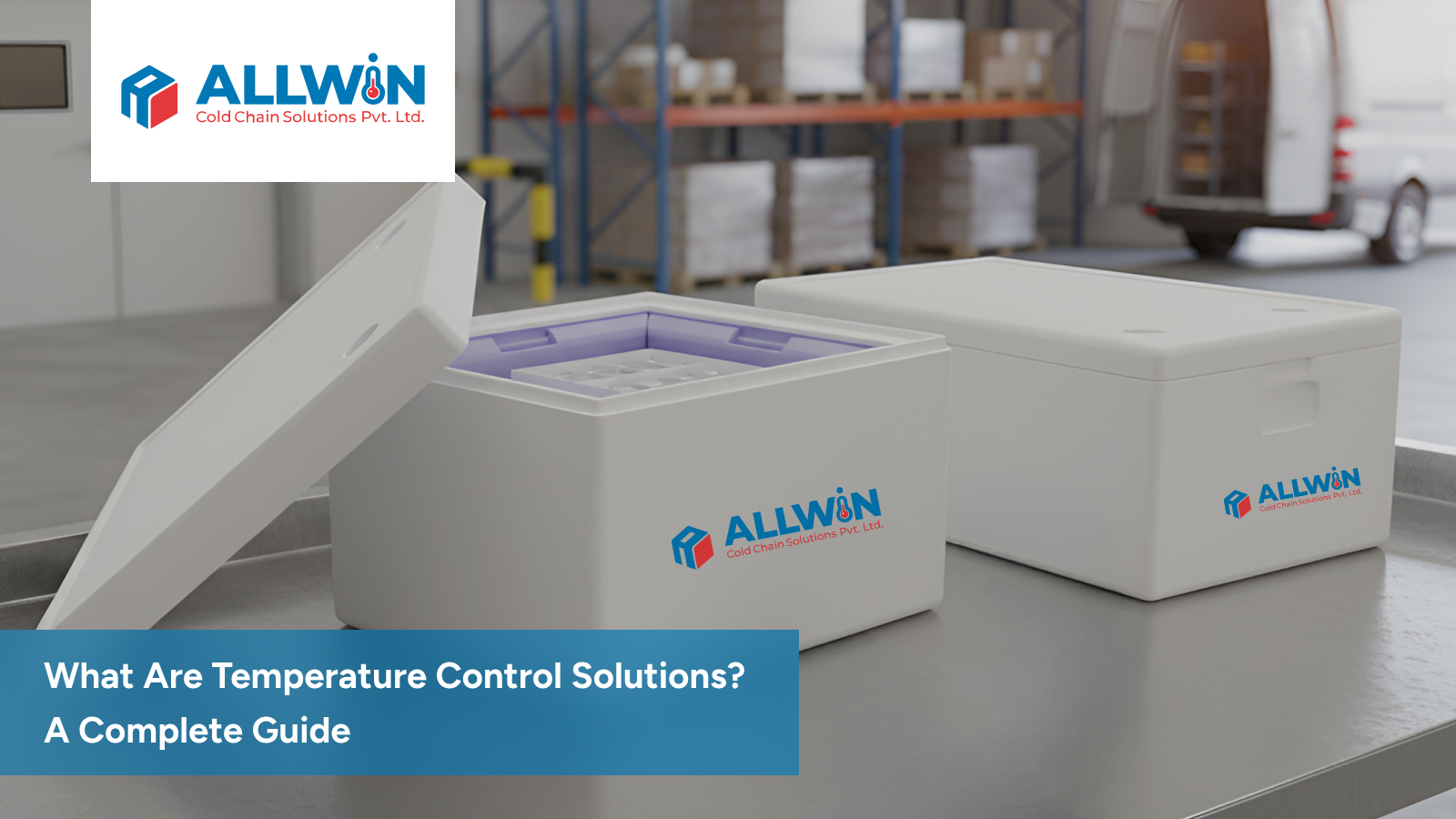
That’s why Temperature Control Solutions have become essential across pharma, life sciences, food, diagnostics, and premium ecommerce. In practice, temperature control is not just refrigeration. It’s stability. It’s repeatability. And it’s being able to prove, later, that the product stayed within the required range because temperature excursions often leave no visible sign.
This guide explains the full picture: what temperature control systems include, how temperature control technology supports them, how temperature controlled packaging fits into real movement, what the different types of temperature control devices are (control vs monitoring), and how to build temperature controlled logistics solutions that actually work for temperature-sensitive goods transport.
At the simplest level, temperature control solutions are the tools and methods used to keep a product within a defined temperature range through storage and transport. But in real operations, “solution” means more than a device. It means a system that controls temperature and proves performance.
A practical way to think about it is: temperature control has two layers.
Without the control layer, you’ll see frequent excursions. Without the proof layer, you’ll have disputes and repeat failures because nobody can pinpoint where the drift occurred. A temperature controlled packaging solutions guide can help businesses understand how packaging fits into the wider temperature control system and when different packaging approaches may be appropriate.
This is also why people talk about temperature control as part of Cold Chain Solutions, because cold chain success is built on a set of linked controls — including single-use packing solutions — not a single product.
Many businesses assume temperature control is mainly a transport issue. But most temperature loss happens in the quiet zones: before loading, during handovers, during waiting time, and at receiving. These are exactly the places where a shipment is more exposed than people realise.
That’s why strong temperature control systems are designed for real routes, not ideal routes. They are built with buffers and repeatability. They assume delays will happen. And they reduce variability by making the few important handling steps consistent.
When these failures repeat, they stop being “exceptions.” They become predictable costs, waste, customer disputes, audit questions, and loss of trust.
Temperature control technology is useful when it reduces uncertainty and supports decisions. It can show where excursions happen, which lanes drift most often, and whether intervention is needed mid-route.
But technology isn’t magic. If the physical controls are weak, poor pack-out discipline, uncontrolled staging time, unrealistic duration planning, and unsuitable packaging such as reusable shippers can still undermine temperature performance. Technology will only give you clearer evidence of a weak system.
The best temperature programs use technology in three practical ways:
Where Temperature Control Technology adds real value
Transport control manages the environment around the shipment. Temperature controlled packaging manages the micro-environment around the product. That difference matters because a shipment doesn’t spend the entire trip inside a perfectly controlled vehicle.
Those are the moments where packaging becomes the “buffer.” It protects the payload when the outside environment is unpredictable. This is why modern cold chain strategies rarely rely on vehicles alone; packaging is used to stabilise performance across mixed real-world conditions.
People often use the term temperature control devices to mean “anything related to temperature.” In practice, temperature control devices fall into two groups: devices that control temperature and devices that monitor temperature.
A complete system uses both, because control without monitoring leads to disputes, and monitoring without control leads to repeated failures.
This is exactly why buyers increasingly ask for Cold Chain Solutions instead of single products, because they need the right combination of control devices and monitoring tools to match lane risk.
Temperature monitoring systems are what turn temperature control into a measurable program. They don’t just help with compliance; they help you understand where the system is weak.
But “good monitoring” is not about monitoring everything the same way. It’s about matching monitoring to risk and actionability.
If a product is regulated or of very high value, you monitor every shipment. If the lane is new or unstable, you monitor it more until the lane is proven. If you can’t intervene mid-route, post-trip logging may be enough to improve performance and reduce repeat issues.
How companies deploy Temperature Monitoring Systems in practice
Also important: monitoring only works if someone reviews it. Monitoring without review becomes storage, not control.
Temperature controlled logistics solutions are not “just cold vehicles.” They are end-to-end workflows that manage temperature from dispatch to receiving: storage → staging → packing → movement → delivery → acceptance → documentation.
The best systems are lane-based. They don’t treat every shipment the same. They allocate the right temperature control devices, the right packaging method, and the right monitoring plan based on:
This is the practical core of temperature-sensitive goods transport match the controls to the lane, then run it consistently.
What end-to-end Temperature Controlled Logistics Solutions usually include
The most common buying mistake is catalog-based selection: choosing a solution because it looks “premium,” not because it fits the lane. A packaging system that works for a 12-hour route may fail on a 36-hour route in peak heat. A solution that performs well in B2B receiving may struggle in the consumer last-mile.
That’s why good procurement is lane-based. It asks the uncomfortable questions:
Once you’re selecting full-system options, providers like Allwin Cold Chain Solutions become relevant because this isn’t only about buying packaging. It’s about building a workable mix of temperature controlled packaging , monitoring, and process support inside broader cold chain solutions.
Temperature control solutions aren’t a single product; they’re a system. Real performance comes from combining temperature control systems (storage/transport/packaging) with temperature monitoring systems that prove what happened and help prevent repeat failures.
The best programs are lane-based, repeatable, and measurable. They recognise that most risk lives in the “in-between” moments: staging, handovers, delays, and receiving. When you build controls and monitoring around those moments, temperature control becomes stable instead of stressful.
For organisations managing temperature-sensitive goods transport, investing in the right mix of temperature control devices, packaging, monitoring, and discipline is what turns cold chain from “hope it holds” into “we can prove it.”

© Copyright 2026 Allwin. All Right Reserved