


2026-08-10
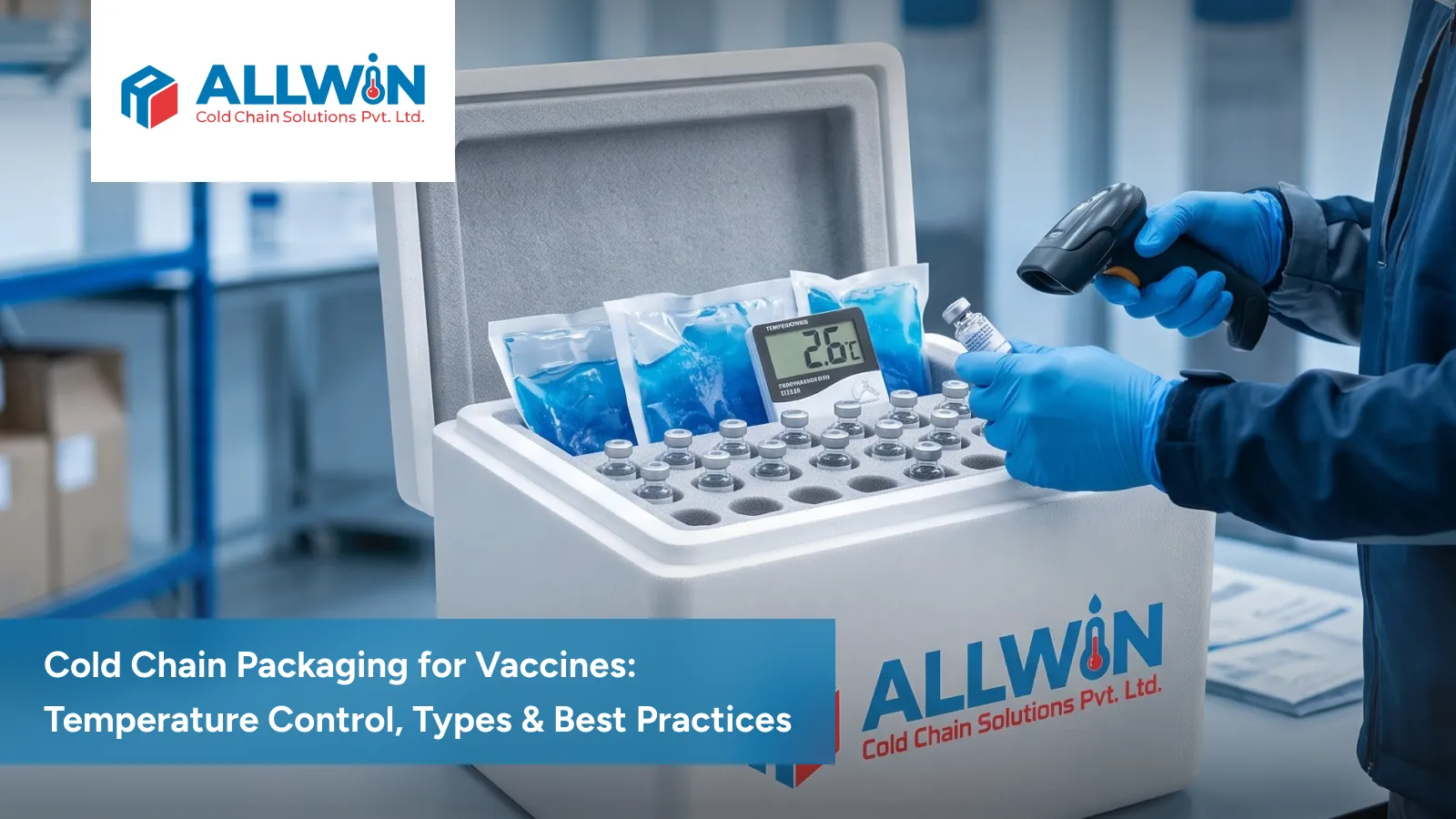
A vaccine can look perfectly fine and be useless. That is the hard part. Once potency is gone, it is gone. It cannot be restored. And nothing about the vial shows it happened. No colour change. No smell. Just a dose that no longer protects anyone.
That is why vaccine shipping is the strictest job in the cold chain. High stakes. Almost no room for error. The numbers prove it. WHO data suggests nearly half of all vaccines are wasted globally each year, and much of that comes from cold chain failures.
Good cold chain packaging for vaccines stands between a working dose and a wasted one. This guide covers what that packaging is. Why temperature control matters. The types and components. The best practices. The rules. And how to pick the right temperature controlled packaging for the job.
Cold chain packaging for vaccines holds a vaccine at its required temperature. From the moment it leaves storage. Until it reaches the clinic. It is not one product. It is a small system built to keep a fragile biological load safe through a messy journey.
An ordinary box protects against knocks. Vaccine packaging protects against heat and cold. That is a different job entirely.
Here is what it has to do:
This is why cold chain packaging solutions for vaccines count as medical equipment. Not just boxes. The packaging is part of keeping the dose safe.
Vaccines are living, fragile products. Push them out of range and the biology breaks. Both freezing and heat exposure can permanently damage vaccines, and the damage leaves no visible sign. That is the dangerous part. A frozen vaccine looks exactly like a good one.
Freezing is often the bigger risk. And the one people underestimate. One study found that 16.7% of vaccines are accidentally frozen during transport. Staff fear the heat. They pack too much coolant. The vaccine freezes against an ice pack instead.
The consequences are simple. And serious:
Temperature control is not a nice-to-have here. It is the whole point.
There is no single best option. Only the right one for the route and the product. It depends on the temperature needed. The length of the journey. And whether the packaging comes back.
Most vaccine shipping uses one of these:
The rule of thumb is simple. One-way rural delivery points to single-use foam, repeat institutional routes to reusable systems, and long or hot lanes to PUF. These choices are also shaped by evolving industry trends and challenges in cold chain packaging.
If types are the formats, components are the parts working inside. A pack is only as strong as its weakest part. Get one wrong and the whole thing fails.
The core components:
That coolant point matters more than people expect. Ice packs must be conditioned before use, precisely to avoid freezing freeze-sensitive vaccines. This is cold packaging for shipping done properly. Matched to the product. Not just stuffed with ice.
Good packaging still fails under bad handling. The box only works if the process around it is right. Most excursions trace back to a skipped step. Not a faulty product.
The habits that protect vaccines:
Do these every time, and the packaging performs the way it was designed to.
Buyers ask this first. The honest answer is: it depends. Hold time is not a fixed number. It shifts with the box, the coolant, the outside heat, and how the pack is loaded.
As a rough guide:
Two things change these fast. Summer heat cuts hold time. A box opened again and again loses cold quickly. So the safe move is to pick a hold time that clears your worst-case journey. Then confirm it with real testing, not a brochure figure.
With vaccines, the paperwork is part of the product. If you cannot prove the temperature held, the batch is in doubt. However well it was actually handled. Several frameworks govern this.
The key ones:
For anyone in pharmaceutical cold chain packaging, meeting these is not optional. It protects patients at one end. And the business at the other.
Features tell you what a box can do. Choosing well means matching it to your route and product. The same packaging can be perfect for one shipment and wrong for the next.
Work through these in order:
Answer these honestly. The right cold chain packaging solutions usually become obvious.
Allwin treats vaccine packaging as one connected system. Not a shelf of separate parts. The box, the coolant, and the monitoring all have to suit the same route. That thinking comes from a parent company that has built PUF-insulated ice boxes and shippers for years.
What Allwin brings to vaccine shipping:
Based in Gandhinagar, Gujarat, Allwin builds temperature controlled packaging matched to your routes. Not sold from a generic catalogue.
Vaccines fail silently. That is exactly why their packaging cannot. A working dose and a wasted one can look identical. Only proper cold chain packaging for vaccines keeps the difference invisible where it should be. Inside a safe temperature range, start to finish.
The approach is not complicated. Match the packaging to the temperature and the route. Condition the coolant so it never freezes the dose. Monitor every shipment and keep the record. Do that, and vaccine safety stops being a hope. It becomes something you can prove.

© Copyright 2026 Allwin. All Right Reserved