


2026-07-09
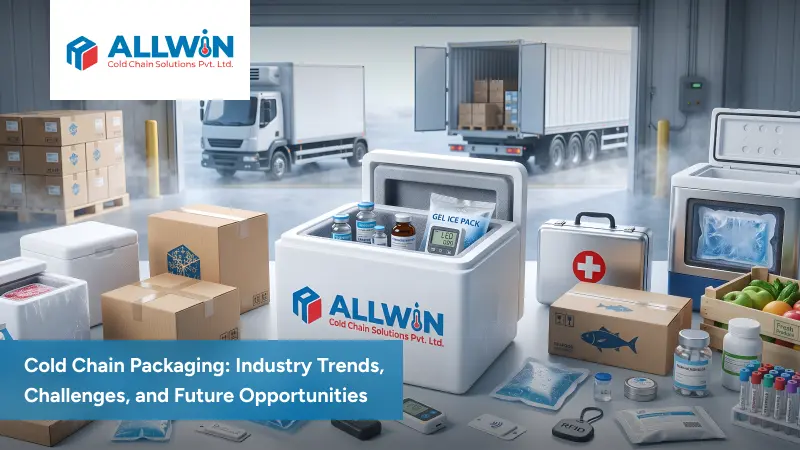
After a medical worker gets the vaccine into their system, it must still function. A prawn box must also arrive at its destination in a good enough condition to be utilized. In both situations, the products were produced correctly, but it is only part of the process. The cold chain must also be maintained from the warehouse where it was stored, then to the truck, possibly to some transshipment point, and finally, to the place of delivery. The entire procedure of transportation is called the cold chain, while packaging protects the product from the moment of leaving the warehouse.
The cold chain includes three elements: science, technology, and the process. Science's element is marking the effect of temperature on the product, while technology involves different measures such as insulation and refrigerants. The process is made up of both the storage and transport of the product. Everything being done correctly, the product will arrive without any damage or loss.
The article is devoted to the description of the state of cold chain packaging today, its importance, its consumers, and the market, technology, and difficulties it experiences.
Cold Chain Packaging keeps a product inside a set temperature range. From the moment it is packed. Until the moment it arrives. It protects perishable and sensitive goods across the whole cold chain storage process. That means cold chain storage, cold chain transportation, and the monitoring between them.
Ordinary packaging stops knocks and dust. Temperature Controlled Packaging does more. It holds a steady temperature around the product. It does that whatever the weather is outside the box.
A good cold chain pack is not one item. It is a small system:
Take one part away and the pack fails. A great box with the wrong coolant fails. Good coolant in a thin box fails too.
Learn More: What Is the Best Packaging for Cold Chain Shipping?
This market is growing fast. Most research firms value it in the tens of billions of dollars. Growth looks steady into the early 2030s. The exact figures differ by source. Treat them as a broad picture, not a fixed number.
Here is what drives the rise:
The short version is simple. More sensitive products. Longer journeys. Higher expectations. All three push the market up.
Many businesses want temperature control. A few cannot run without it. For them a warm shipment means a recall or a lost batch. These are the food and pharma cold chain industries. They sit at the centre of the sector.
The main users tend to be:
The thread running through all of them is risk. High value. Easy to spoil. Tightly regulated. That is when cold chain packaging stops being optional.
The difference is the job it does. Normal packaging guards against damage. Cold chain packaging fights heat for the whole trip. Heat always wants to get into a cold box. The packaging exists to hold it off. Long enough for the product to arrive in good shape.
A few features set it apart:
That last point is easy to miss. In many industries, proving the temperature held matters almost as much as it holding.
Cold chain used to be a back-office concern. That has changed. The pandemic put vaccine logistics on the front page. The rise of biologics and home grocery delivery kept the pressure high. Routes are longer now. Hotter in places. Less forgiving.
The stakes keep rising:
Packaging used to be a small buying choice. Now it can protect or damage a whole brand.
Demand is not spread evenly. A few sectors pull the cold chain industry forward faster than the rest. They buy in volume. So they decide what gets built next.
A pattern shows up in that list. The sectors driving growth are the ones where a failure is expensive, dangerous, or both.
See Also: Advanced Temperature Controlled Packaging for Pharma & Food Logistics
Packaging holds the temperature. Monitoring proves it did. This is the fastest-changing part of the industry. Sensors are cheap now. The data is easy to act on, not just store.
Today the box often travels with a device. It records or sends readings as it goes. Some newer systems add real-time tracking and a cloud dashboard. That turns a plain box into a live system.
The value shows up in a few ways:
The shift is subtle. Monitoring used to prove what went wrong after the fact. Now it catches problems in time to fix them.
Progress has not killed the old problems. The same ones keep coming up. Most live in the gap between the lab and the road. Packaging behaves well in a calm test. A real trip is delayed and hot.
The common challenges:
None of these is dramatic alone. The damage comes from how often they repeat. A rare exception becomes a predictable cost.
The cold chain does not run on good intentions. It runs on rules. Pharma most of all. The paperwork proving a shipment held its range matters almost as much as the shipment. Most of it is built on Good Distribution Practice, or GDP. It is backed by the FDA, EMA, and WHO.
In practice, compliance means:
This is not red tape for its own sake. Strong compliance protects patients at one end. It protects the business from penalties at the other.
Now the good part. The same pressures that create problems also open doors. The businesses that move early tend to win the long contracts.
Where things are heading:
The common theme is clear. The future rewards packaging that does more than insulate. It has to be measurable, sustainable, and built for longer routes.
Pharma tests this packaging hardest. The products are valuable, fragile, and heavily regulated at once. The usual bands are chilled at around 2°C to 8°C. Frozen at roughly -20°C or below. Ultra-cold below about -60°C for some vaccines and therapies.
The margin for error is tiny. So pharma shipments ask a lot:
Here, packaging is not just protection. It is part of the proof that a medicine is safe.
The newest pressure comes from our front doors. Online grocery. Meal kits. Direct-to-consumer perishables. All of it moved cold chain out of the tidy warehouse. Into the messy last mile. A delivery slips to the next day. Nobody is home to take it.
That brings specific problems:
For brands selling fresh or frozen goods online, packaging is now part of the customer experience. Not a background detail.
Allwin treats cold chain as one connected system. Not a shelf of loose parts. The box, coolant, and monitoring all have to suit the same route. So we match them to your lane. We do not just hand you a catalogue. That thinking comes from a parent company. It has built PUF-insulated ice boxes and shippers for years.
What you get with Allwin:
Cold chain packaging is now one of the most important links in modern Cold Chain Logistics. A growing market. Stricter rules. The twin booms in biologics and online grocery. Together they turned it from an afterthought into a strategic decision. Some businesses treat packaging as a system. Matched to the route. Backed by monitoring. Built for the worst realistic trip. Those are the ones that avoid the spoilage, the disputes, and the failed audits.

© Copyright 2026 Allwin. All Right Reserved