


2026-05-29
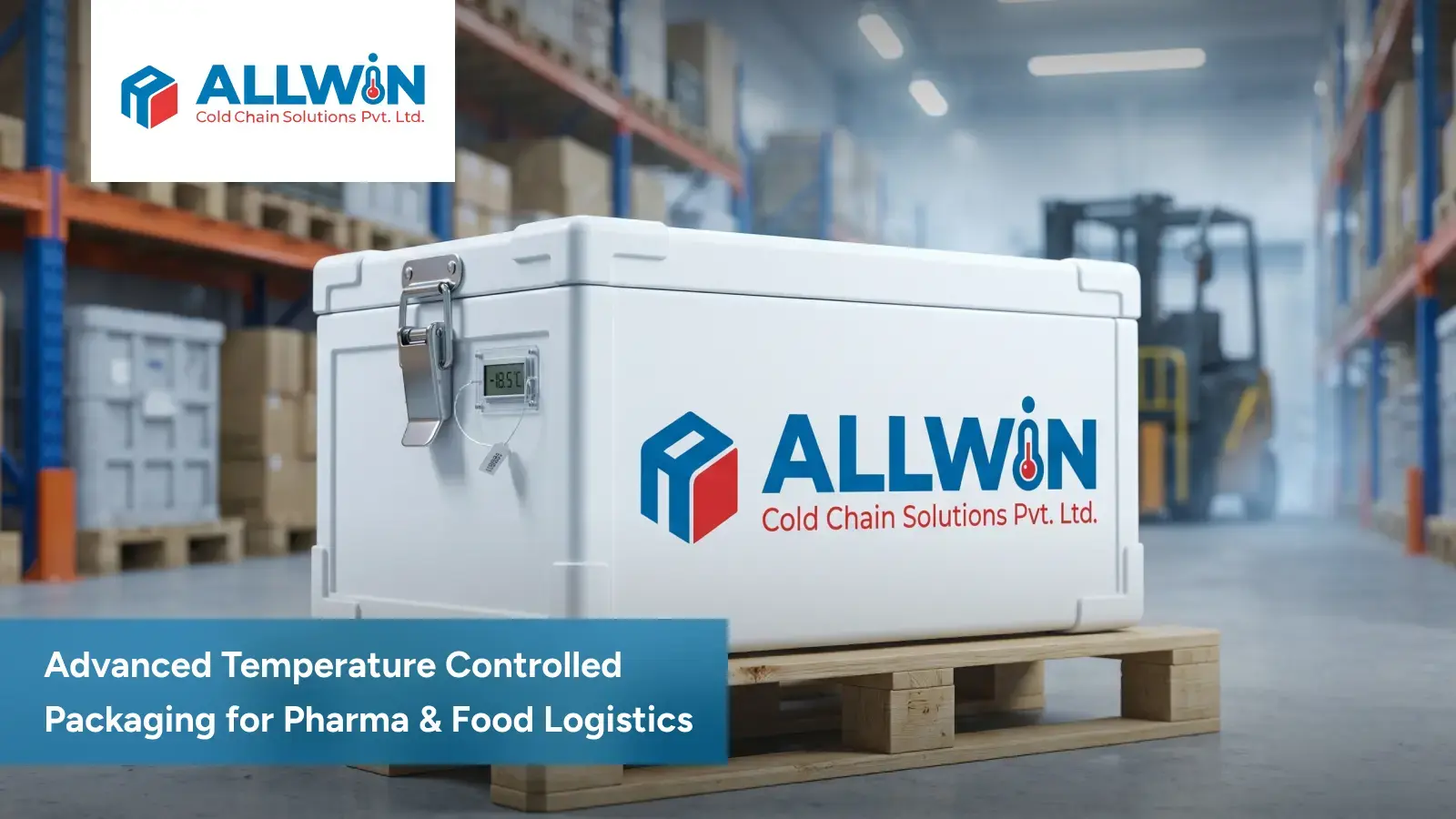
Most temperature-sensitive shipments fail due to one significant error, not two. Smaller issues also contribute to failure, such as longer than expected waiting time at the time of dispatch, delays in picking up the product, a hub handover taking more time than scheduled, or a delivery try being postponed to another day. The type of situation can result in product quality being affected without anyone realising it.
For businesses dealing with pharmaceutical and food products, the risk is not only maintaining the correct temperature to keep these products cold but also maintaining their stability throughout processing and distribution. Whether a product looks fine from the outside, temperature will still have an effect on its quality, shelf life or potency as well as customer acceptance.
As a result, packaging for temperature-controlled products has become necessary within the cold chain logistics process. It helps to protect a product during actual transit, rather than only under ideal conditions. This guide will provide information about how advanced temperature-sensitive packaging works, what types of packaging are available to businesses, and how to determine which type of temperature-sensitive packaging is appropriate for each type of business that transports pharmaceuticals or food.
Temperature controlled packaging is packaging designed to keep products within a required temperature range during storage, handling, and transportation. It is not just an insulated box. A proper system includes insulation, coolant, pack-out method, payload space, route duration planning, and sometimes monitoring support.
In simple terms, the packaging creates a protected environment around the product. The outside temperature may change, but the packaging helps slow heat transfer and maintain the required condition for a planned period.
Temperature controlled packaging usually includes:
For businesses looking for cold packaging for shipping, the goal should not be only to buy a cold box. The goal should be to choose a complete temperature-controlled solution that matches the product, lane, season, and delivery risk.
Read More: Returnable Packaging for Pharmaceutical: Compliance, Cost & Best Practices
Pharma and food products both depend on temperature stability, but their risks are slightly different. Pharma products may face concerns around potency, product integrity, documentation, and shipment acceptance. Food products may face spoilage, shorter shelf life, texture changes, freshness loss, or customer complaints.
Basic insulation may work for short and low-risk movement, but real logistics is rarely that simple. Products may face multiple handovers, high ambient heat, transport delays, courier sorting, and receiving delays. Advanced packaging is built to handle these practical challenges better.
Advanced packaging is important because it helps:
Temperature controlled Packaging for Pharmaceuticals is useful for vaccines, biologics, diagnostic kits, samples, and clinical materials. Temperature controlled packaging for food supports frozen foods, dairy, seafood, meat, chocolates, meal kits, and premium grocery deliveries.
Temperature controlled packaging works by combining insulation and coolant in a planned way. The insulation slows down heat movement from outside to inside. The coolant helps maintain the required internal temperature for the product.
In passive systems, the packaging does not use electricity. It depends on insulation and pre-conditioned coolant. This is why passive packaging for pharma is widely used for courier shipments, sample transport, pharma distribution, and many controlled food deliveries.
A good system depends on:
For sensitive shipments, businesses may use Temperature Loggers to Monitor internal and external temperature. This helps teams understand both product-side conditions and outside exposure during the journey.
Learn More: Temperature Controlled Packaging Solutions: A Complete Guide
There is no single packaging type that works for every shipment. Different temperature controlled packaging solutions are used depending on shipment size, temperature range, product value, and route duration.
Common options include:
Allwin Cold Chain Solutions offers high performance reusable courier & parcel shipper boxes, pallet shippers, PCM-based chill pads, reusable shippers, data loggers, and returnable cold chain boxes for different cold chain requirements.
Advanced packaging should be selected based on real performance, not only appearance or box strength. A strong-looking shipper can still fail if it does not match the route, product, coolant, or handling pattern.
Key features to check include:
For thermal packaging for pharmaceuticals, repeatability is especially important. The same packaging system should perform consistently when the pack-out process is followed correctly.
Cold chain logistics is not only about frozen products. Different products require different temperature conditions. Some need chilled movement. Some must stay frozen. Some only need protection from heat exposure. Some pharma products need controlled ambient movement.
Common cold chain needs include:
This is why temperature controlled packaging for pharma and temperature controlled packaging for food should not be selected in the same way. Pharma may need tighter control and documentation, while food packaging often focuses on freshness, shelf life, and delivery experience.
Pharma logistics has very little room for assumption. A medicine or vaccine can arrive sealed and still need review if the required temperature was not maintained. This is why pharma cold chain packaging must support both protection and documentation.
Common pharma applications include:
In many cases, thermal packaging for pharmaceuticals works best when paired with a logger. The packaging helps maintain conditions, while the logger helps prove what happened during transit.
Food logistics has its own pressure points. A product may not need the same documentation as pharma, but poor temperature control can quickly affect quality, freshness, and customer trust.
Food cold chain packaging is useful for:
For food brands, packaging is directly linked to customer experience. If the product reaches soft, spoiled, melted, or damaged, the packaging failure becomes a brand problem.
Most cold chain packaging problems happen because businesses plan for the best-case route, while shipments move through real-world delays. A 24-hour route may become 36 hours when staging, hub dwell time, and receiving delays are included.
Common problems include:
This is where experienced cold chain packaging companies can help. They look at the full route, not only the box.
Choosing the right packaging starts with the product and route. The first question should not be “Which box is best?” It should be “What does this product need during this lane?”
Before selecting packaging, businesses should check:
For small one-way pharma movement, courier shippers with PCM and a logger may work well. For repeat distribution, reusable shippers may offer better long-term value. For bulk movement, pallet shippers may be more suitable. A good temperature-controlled solution should match the lane, not just the product category.
Even good packaging can fail if the process is weak. Cold chain performance depends on how the packaging is prepared, packed, handled, moved, and received.
Best practices include:
Strong cold chain packaging solutions are not just materials. They become part of a repeatable operating process.
Packaging cost should not be judged only by price per box. A cheaper solution may become expensive if it causes rejection, spoilage, complaints, product loss, or repeat shipping.
Cost depends on:
For pharma, ROI may come from reduced rejection risk, better documentation, and stronger shipment confidence. For food, ROI may come from fewer complaints, better freshness, reduced spoilage, and stronger customer experience.
Advanced temperature controlled packaging is not only about keeping products cold. It is about keeping them within the required range through real logistics conditions: storage, staging, loading, transport, handovers, last-mile movement, and receiving.
For pharma businesses, the right packaging supports product integrity, quality review, and compliance confidence. For food businesses, it supports freshness, shelf life, and customer satisfaction. The best packaging is selected around the product, route, duration, temperature range, handling risk, and monitoring need.
A strong cold chain does not depend on hope. It depends on the right packaging system, the right coolant, disciplined handling, and clear temperature records.

© Copyright 2026 Allwin. All Right Reserved