


2026-09-24
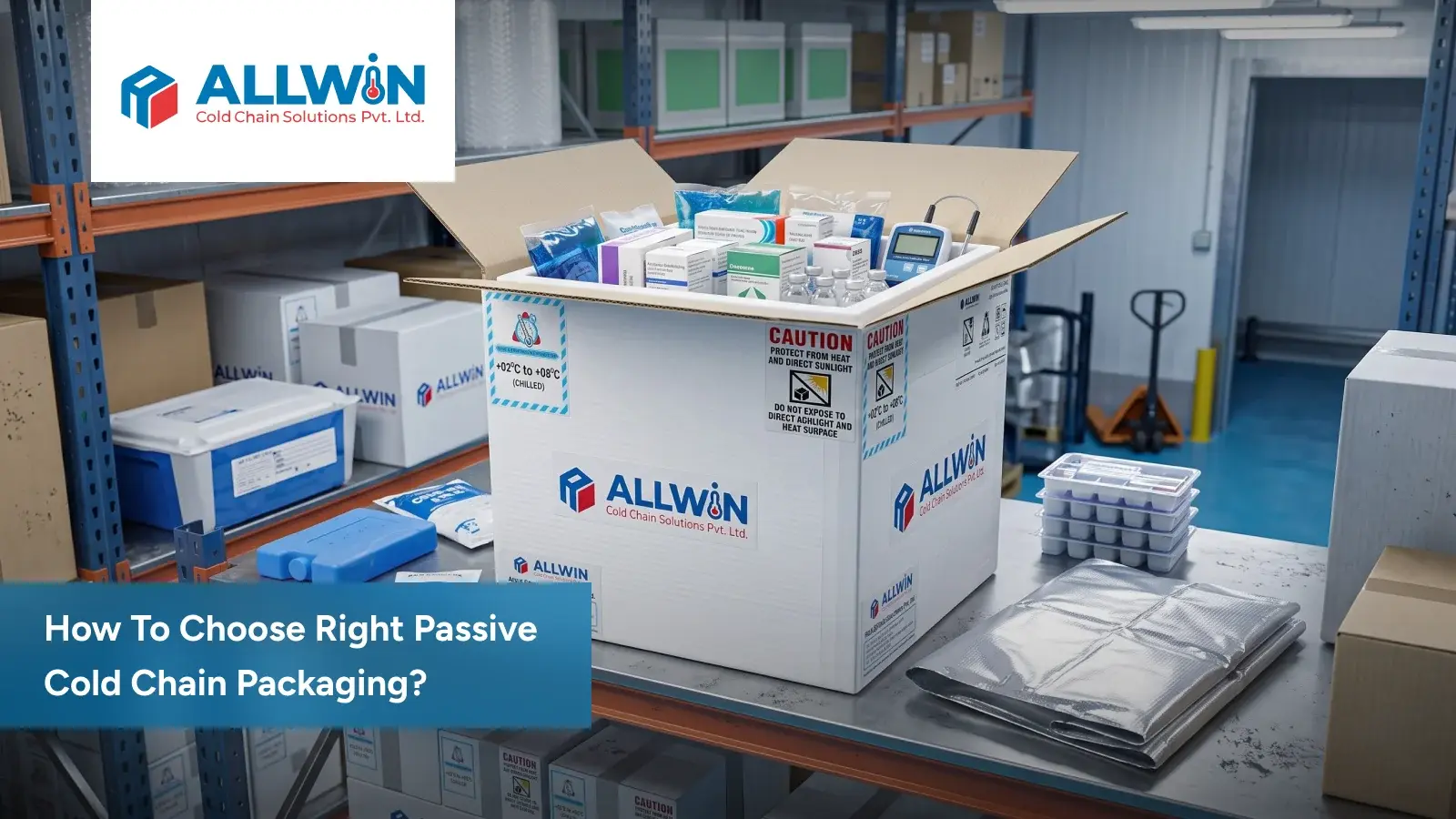
Choosing the cold chain packaging is important when products must stay within a certain temperature range during transport. Passive systems rely on -chilled cooling packs and insulation instead of powered refrigeration. That’s why they are often used in pharmaceuticals, healthcare, food, labs and logistics. Reusable cold chain boxes can be a choice when shipments need packaging that can be used more than once as long as the conditions are right.. It’s not just about the size of the box.
Product sensitivity, target temperature, package duration, ambient conditions, coolant type, payload volume, handling requirements are all considerations. An effective passive system will meet the conditions for the desired shipping lane whilst also catering to the needs of the operation.
Passive cold chain packaging is a temperature-controlled, non-mechanical cold chain solution, consisting of a thermally protected container and a predetermined quantity of pre-conditioned coolant. Depending on the specified design conditions, coolants can be composed of dry ice, phase change materials, gel packs, or other thermal media that achieve a desired temperature profile. The insulated container is designed to prevent heat transfer between the contents and the environment. These temperature controlled packaging solutions can be configured for different product requirements, shipment durations, and temperature ranges.
The effectiveness of passive temperature-controlled packaging is influenced by temperature performance, insulation, coolant, payload, package design, and environment. Packages are available for refrigerated, frozen, and controlled-ambient services. The target temperature range should be determined prior to choosing a passive system.
Exposure to the exterior environment may impact products that are subject to specific storage and transport conditions. Handling, ambient temperature, improper coolant conditioning, and pack-out can all impact the contents' internal environment.
Packaging should be chosen to meet the true shipping lane. Transit times, temperature, loading conditions, time delays and payload volume all need to be checked at the same time especially when shipping pharma and healthcare products.
During cold chain logistics packaging performance can directly affect how well a product stays protected in every part of transport. Choosing a system that matches the required temperature range, the length of the journey and how sensitive the product is is important. The expected conditions along the way are essential. When packaging performance is qualified and packing steps are followed consistently the chance of temperature excursions during transit goes down.
Identify the correct temperature; until we know what temperature you require, it is difficult to design the optimum solution. For example, a shipment at 2C to 8C is going to have very different packaging requirements than one at -20C or controlled ambient conditions.
Remember some products can handle temperature ranges more than others. Some can be frozen safely while others may be damaged if they get too hot.
Before choosing a system think about these points:
Once packaging concepts are developed, determine the packaging structure with sufficient volume and payload capacity to carry the payload through the transportation conditions. Passive systems are available from small courier shippers to multi-cube pallet-shippers of varying insulation materials, coolant design, and payloads. Ensure there is room for cooling inside the package, adjacent to the product, and add to volume to serve the product and thermal insulators.
Too large increases material and freight costs; too small reduces thermal capacity. Consider courier shippers for smaller shipments where volume and duration are limited. For larger shipments, consider pallets with pallet shipping containers. Allwin designs single-use courier and pallet shippers with rated volumes, temperature ranges, and validated durations.
Businesses evaluating disposable formats can explore single-use temperature-controlled packaging, where Allwin lists courier and pallet shipper configurations for different temperature requirements.
The coolant is an integral part of passive systems. Some coolants are chilled or frozen packs, coolant gels, phase change materials, and dry ice (for very low temperature requirements).
For many refrigerated shipments, gel packs are appropriate; however, if the product is sensitive to freezing or if the temperature needs to be controlled, PCMs may be better, as they have a set phase change temperature zone.
The quantity of coolant used and where it is placed can also affect the performance of the cooler, so pack-out configuration, conditioning, and validation also need to be considered.
Coolant selection should also account for the product's temperature sensitivity, shipment duration, and expected ambient conditions. Using the wrong coolant or conditioning method can create temperature excursions, even when the outer packaging provides adequate insulation. Testing the complete pack-out configuration helps confirm that the selected coolant performs as required during transit.
Whether disposable or reusable passive packaging is chosen depends on frequency of shipments, the nature of the routing pattern, possibility of return shipment, and sustainability goals.
A disposable system works well for one-way trips, unpredictable routes, and operations that have difficulty accessing return packaging. Allwin's single-use solutions include courier and pallet shippers along with temperature controlled packaging solutions with different payload volumes and validated durations.
Reusable systems are a good choice when the packaging can be returned and transported via regular shipping routes. Allwin's one-piece molded insulated reusable cold chain boxes, with or without chill pads, are designed for repeated use in pharmaceutical, food and beverage, fisheries, and other temperature-sensitive logistics.
For any company exploring reusable cold chain packaging solutions, they need to ensure that the reverse logistics process is viable. Reusability becomes most effective where returning the packaging through the supply chain regularly can be achieved.
Sustainable cold chain packaging must be viewed across the entire lifecycle. While a reusable package may offer reduced packaging waste over time, it will also be impacted by return distances, cleaning, handling, storage, and the number of successful reuse cycles.
The choice of a supplier is not simply based on measurements, number of uses, or cost. The supplier should have knowledge of the product, the shipping lane, temperature range, transit time, and operational limitations.
Look for support in these areas:
Businesses looking for broader cold chain shipping solutions should also consider how packaging fits into transportation, storage, monitoring, and handling. Packaging is one part of the overall cold chain. Businesses comparing formats can also review best packaging for cold chain shipping.
Allwin Cold Chain Solutions offers temperature-controlled packaging designed for the pharmaceutical, healthcare, laboratory, logistics, food, and e-commerce industries. Solutions include single-use packaging, reusable cold chain packaging, chill pads, data loggers, and reusable thermal boxes.
The company offers a range of packaging formats. Allwin Cold Chain Solution's single-use offering presently comprises courier and pallet shippers with specified temperature range, usable volume, and validation period. Businesses looking for pharmaceutical cold chain packaging can explore cold chain packaging solutions and choose based on the temperature range, shipping duration, payload, and format.
Allwin Cold Chain Solution also makes reusable packages where the temperature sensitivity and shipment lengths are such that reuse and return logistics make sense. Its published solutions include thermal testing, shipping-lane simulation, packaging implementation support, and temperature-management consulting.
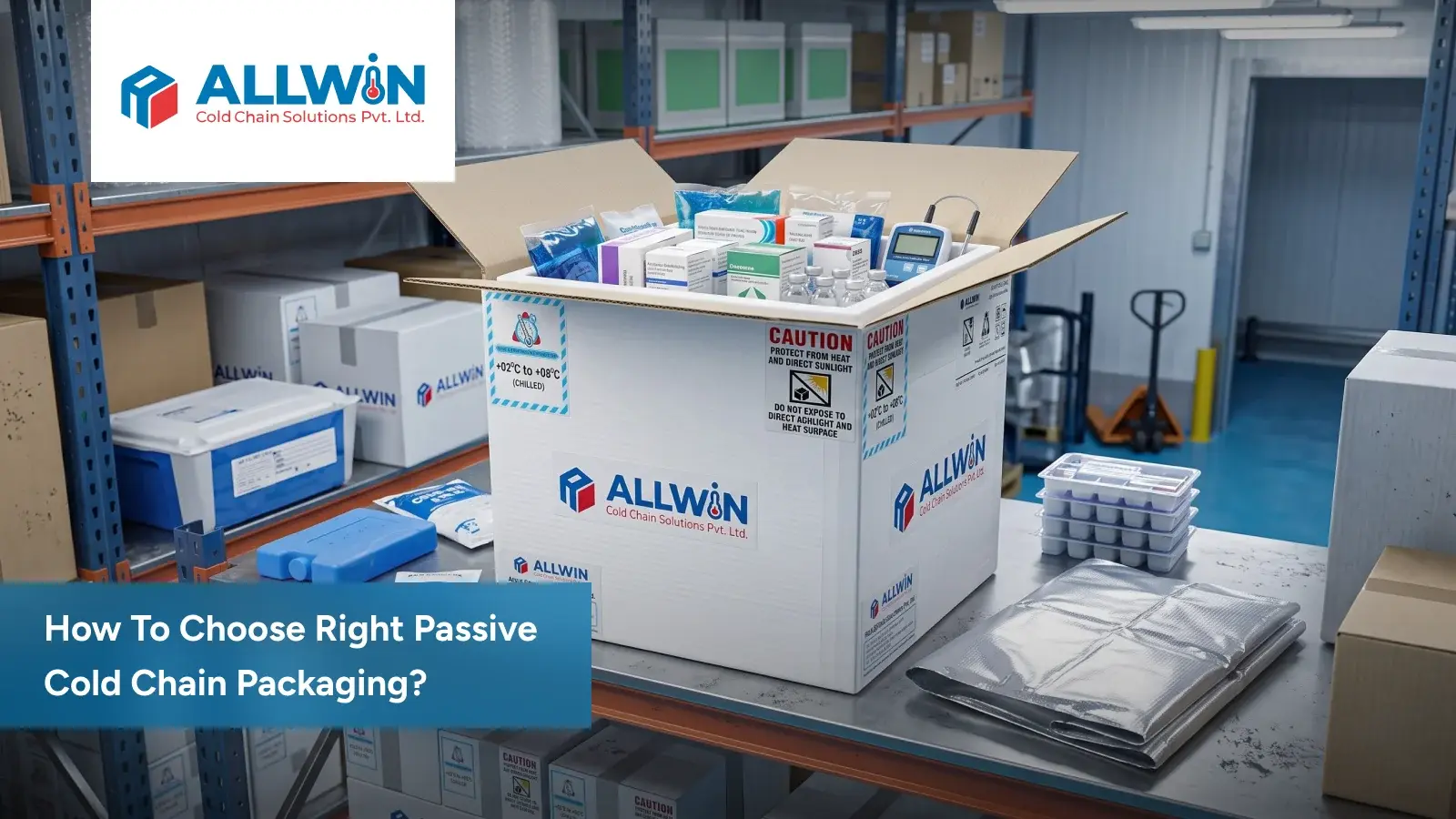
Selecting passive systems starts with having a great understanding of the product, not a passive packaging catalogue. The temperature window, sensitivity of product, payload, transit time, ambient conditions, coolant, insulation, shipment frequency, and more should all be taken into account before you decide on a system. For some shipments, one-way packaging may be ideal, and single-use passive packaging solutions make sense for single-use distributions.
In instances where there are repeat shipping lanes, reusable packaging makes sense. Conventional gel packs may be sufficient, but where more aggressive temperature control is required, PCMs should be a consideration. A passive system that meets your requirements should always be tested and validated to the shipping conditions.

© Copyright 2026 Allwin. All Right Reserved