


2026-11-26
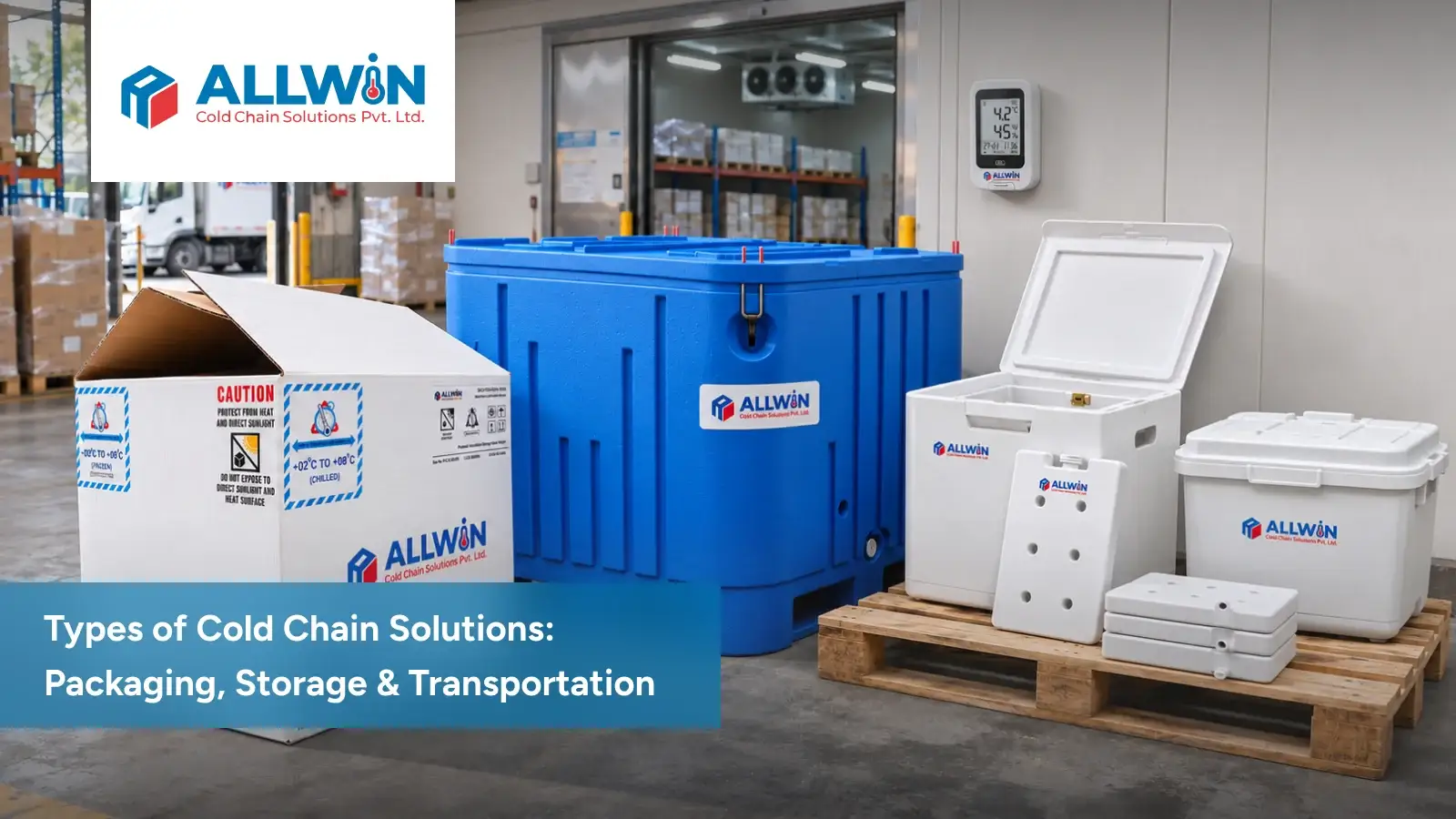
A cold chain is only as good as its weakest link. If you break it at any point (in the packaging, in storage or in transport), then your temperature sensitive product can arrive at its destination spoiled with absolutely no visible indication that anything has gone wrong. Understanding the various types of cold chain solutions available is key to protecting the whole journey rather than just one part of it. Cold chain solutions are what keep your vaccines, food, biologics and diagnostics at the correct temperature throughout the journey from point of origin to point of destination. For businesses on a regular route, VIP shippers are the way to go in terms of both cost and waste, whilst still providing a reliable cold hold. This guide looks at what cold chain solutions are, the various types available, how they work together and how you go about selecting the right solution for your product.
A cold chain solution is the complete system that keeps a product within a defined temperature range right through its entire journey. It’s not a single product. It’s the link between the packaging, storage and transport so that the cold is not broken at any point.
The normal supply chain transports products, while the cold chain transports products under a defined temperature regime. This is crucial for sensitive and perishable goods.
The cold chain operation takes place in three stages:
All three processes have to be real, otherwise, it will be a waste of time and money.
There is no such thing as a ‘cold chain product’. Different types of cold chain systems are appropriate for different products, different routes and different budgets. Most systems will be a combination of a few of the above.
Single use cold chain packaging is designed for one-way exports where the box does not need to be returned. It is a cost-effective solution for long-distance shipping and eliminates the need for reverse logistics. The products are packed, shipped, and delivered to the receiver, who can review the temperature data before the packaging is disposed of.
Vacuum Insulated Panel (VIP) shippers are designed for transporting temperature-sensitive products that require reliable thermal protection over extended periods. They use advanced vacuum insulation technology to minimise heat transfer and maintain the required temperature during transit. VIP shippers are suitable for pharmaceutical products, vaccines, biologics, and other temperature-sensitive shipments where consistent temperature control is essential. They are available in reusable designs, making them a practical option for businesses handling frequent shipments.
PCM cooling pads (Phase Change Material cooling pads) are an essential component of temperature-controlled packaging. They absorb and release thermal energy during the phase-change process, helping maintain a stable temperature inside the insulated box throughout transportation. Unlike conventional ice packs, PCM cooling pads are designed to maintain specific temperature ranges based on the selected phase-change point. Allwin offers PCM cooling pads with six different phase-change points, ranging from -33°C to +18°C, and ten different sizes to match specific product and packaging requirements.
Cold chain data loggers are monitoring devices used to record and track temperature conditions during the storage and transportation of temperature-sensitive products. They help businesses verify whether products have remained within the required temperature range throughout transit. Available in single-use, multi-use, and wireless options, these devices provide valuable temperature records for pharmaceutical, healthcare, food, and other temperature-sensitive shipments. By identifying temperature fluctuations and maintaining shipment records, cold chain data loggers support product quality, regulatory compliance, and better supply chain visibility.
Reusable cold chain boxes are designed for multiple shipping cycles while maintaining the required temperature of sensitive products. These boxes typically feature durable insulated construction and can be used with PCM chill pads or other suitable coolants to maintain specific temperature ranges during transportation. They are suitable for pharmaceutical, healthcare, food, dairy, and seafood logistics. Their reusable design helps reduce packaging waste and long-term packaging costs while supporting sustainable cold chain operations.
Good temperature-controlled shipping packaging combines the right insulated box with the right coolant. Understanding the process of selecting cold chain packaging for temperature control helps ensure the packaging meets your product’s temperature requirements throughout transportation.
There’s no single stage in the cold chain that protects the product in isolation. The cold chain works because the product is passed from one stage to the next (packaging, storage, transport) without the temperature ever rising.
Here is how the three connect:
The weak points are the gaps between stages, the handovers and the time you’re waiting. Strong packaging is what fills those gaps and that’s why it’s so critical in cold chain transportation.
Any industry with products that lose their potency as a result of temperature change will have a cold chain. The products will be all different but the requirement for an unbroken cold chain will be the same.
In all of the above applications, selecting the right coolant and suitable packaging helps protect products from temperature fluctuations and minimise transit losses. Using a reliable temperature data logger for food and pharma also helps monitor temperature conditions throughout transportation and maintain product quality.
A good cold chain is up against a very tough set of circumstances indeed. Most of the failures are down to the same handful of issues and it’s absolutely essential that you know what they are so you can plan around them.
Buy the packaging, the coolant and the monitoring as part of one integrated system rather than buying them separately and then putting them together. If you’re able to plan all three around the same route they work as one.
An integrated solution, supported by proper cold chain implementation and training, turns temperature control from a hope into something you can prove. It helps ensure that packaging, cooling systems, monitoring devices, and handling procedures work together to maintain the required temperature throughout transportation.
Choose the right solution based on your actual shipment requirements rather than relying on a generic specification. Understanding the best packaging for cold chain shipping can help you evaluate suitable packaging options and make informed decisions. A few simple questions about your product, temperature range, and shipping duration can help you identify the most effective solution.
Answering these questions will help you identify the most suitable cold chain packaging solutions based on your product type, required temperature range, and shipping duration. This ensures better temperature protection, reduced transit risks, and reliable delivery of temperature-sensitive products.
Allwin designed and supplied complete cold chain packaging solutions rather than just the box. The box, the coolant and the monitoring are all designed and specified by the same supplier so that the whole consignment works as one. That’s the product of many years’ experience in the PUF packaging business.
What Allwin cold chain solutions offers:
Serving clients in the pharma, healthcare, lab, logistics and e-commerce space and based in Gandhinagar, Gujarat, Allwin builds solutions that are specifically tailored to your operation.
The cold chain solution keeps the temperature sensitive product safe throughout the entire process (packaging, storage and transport). None of those processes can do that on their own. You need a full system of insulation, PCM cooling and monitoring to be effective. If it’s all done right through the process then the product will arrive in a usable, compliant and on time state. If anything goes wrong at any one stage the whole consignment is at risk and there is no obvious sign of that. The companies that get the cold chain right see it as a system rather than a collection of components. They pick the right coolant, they fit the box to the product and they monitor the consignment.


© Copyright 2026 Allwin. All Right Reserved