

Allwin
Allwin
images blog detials

What Is a Cold Chain Solution? A Complete Guide

Home Our Blog

2026-10-22

Cold chain solution for temperature sensitive products

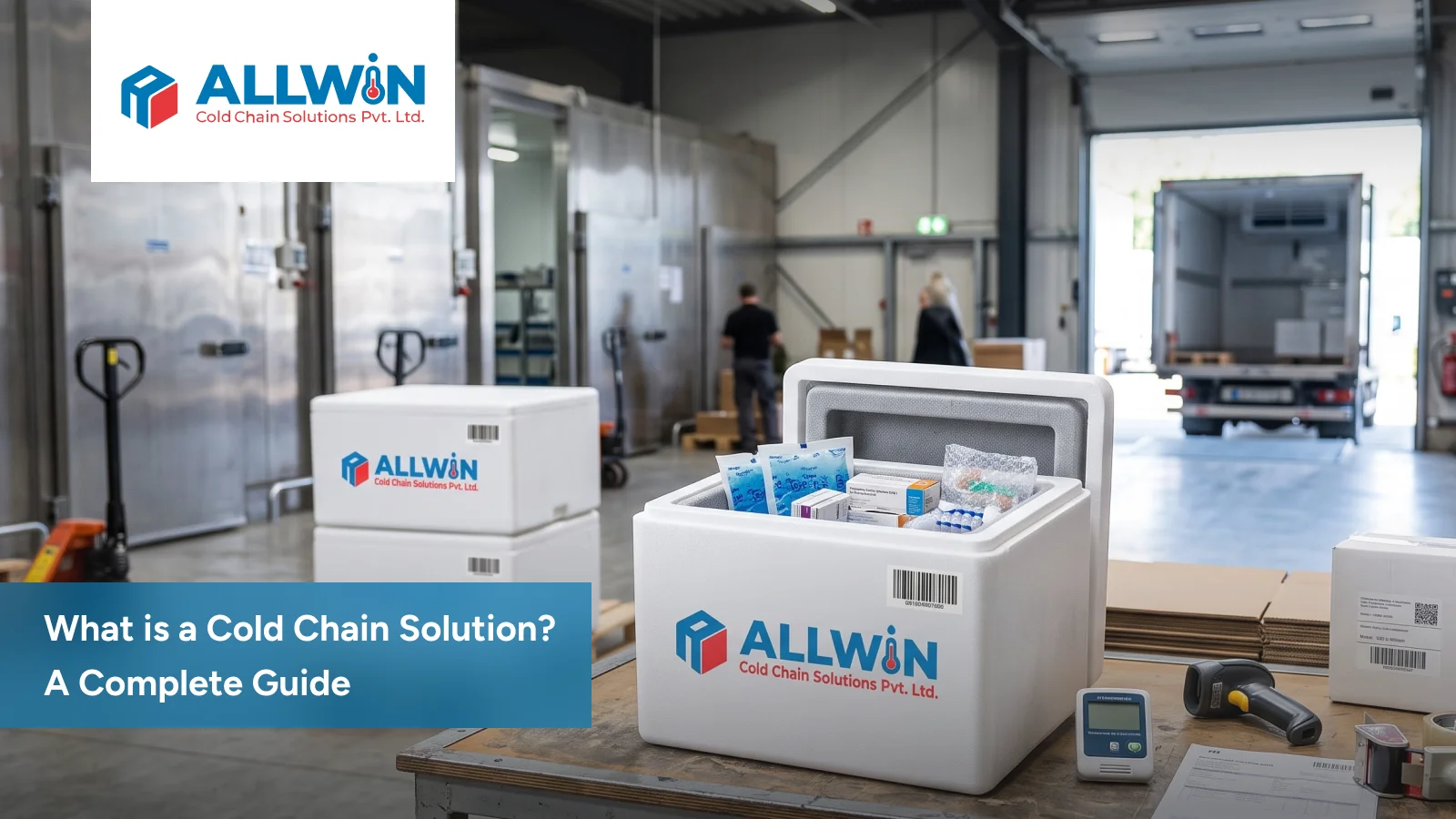
Some products start dying the second they leave the fridge. Vaccines, biologics, fresh food. A few hours too warm and they’re done. Nothing on the outside shows it. This is the problem cold chain solutions exist to fix. The cold chain solution refers to the entire system used for maintaining temperature-sensitive goods within required limits, all the way from the manufacturer to the customer. In this whole system, packaging, the mode of cooling, transportation, storage, and monitoring of temperatures with the help of some temperature data loggers must be involved. When everything is done correctly, products can be delivered in proper and usable condition. Get it wrong and the load is gone. Here is how it all works.

What is a Cold Chain Solution? How Does it Work?

A cold chain solution keeps a product inside a set temperature range. It covers the entire journey. It is not one product. It is a connected system. Every stage has to hold the line. One break and the chain fails.

Picture a relay. Goods go from cold storage into a packed shipper. Then onto a truck. Then through a hub. Then out for final delivery. Every handover is a moment the temperature could slip. One weak link takes down the whole run.

Underneath, the system does three things at once. Insulation and coolant hold the temperature. Transport and storage keep the goods moving without breaking the chain. Monitoring records the whole thing. Now you can prove it holds. That is a reliable temperature controlled supply chain.

Key Components of Cold Chain Solution

A cold chain solution is only as strong as its weakest part. These are the pieces that make it work.

  • Cold chain packaging: The insulated boxes and shippers holding the product. Good cold chain packaging slows the heat. It keeps the payload steady through delays and rough handovers.
  • Coolant: Gel packs or phase change material that holds the target temperature. Condition it properly. It needs to chill the goods, not freeze them.
  • Cold storage: Temperature-controlled rooms and warehouses. Stock waits there safely between legs, before and after transit.
  • Refrigerated transport: Reefer trucks, air freight, sea containers. They carry the goods and hold the range. The vehicle is one link. Not the whole chain.
  • Monitoring devices: Data loggers and sensors recording temperature the whole way. They turn a shipment from a guess into a documented fact.

Match every part to the same route. That is what makes the system hold together.

Types of Cold Chain Solutions

No single cold chain solution fits everything. What you need comes down to the product, the route, and the budget. Here are the main types.

Active Systems

Active systems run on powered units that regulate temperature. They hold a precise range across long, high-value shipments. They cost more and need power. Keep them for critical loads. These systems are useful for shipments that need temperature control and careful monitoring. Their effectiveness relies on power sources and regular system upkeep.

Passive Systems

Passive systems lean on insulation and coolant alone. No power. No moving parts. For routes a solid passive system works well and is more affordable. Their performance depends on how good the insulation's how the cooling materials are arranged and how long the shipment takes. These systems are often used for deliveries that're sensitive, to temperature, where a tested packaging solution can keep the product within the needed temperature range during transit.

1. By Temperature

Solutions also divide by range. Frozen, chilled, controlled ambient. Each one needs its own temperature controlled packaging and coolant. The product decides.

2. By Reuse

Some are single-use, built for one-way export. Others are reusable, for closed-loop routes. There the packaging comes back and goes out again. Reuse trims cost and waste over time.

What Temperature Ranges Are Used in Cold Chain Logistics?

Temperature is the thing in cold chain logistics. Each product needs a temperature range and even tiny changes can hurt the quality and safety of the product. Choosing the right cold chain packaging for temperature control helps keep the needed conditions during storage and moving. These are the temperature ranges.

  • Frozen, -18°C and below. Seafood, frozen food, some biologics. Heavy insulation and frozen coolant. Packaging must limit heat transfer and maintain frozen conditions throughout transit.
  • Chilled, 2°C to 8°C. The workhorse pharma range. It covers many vaccines and biologics. Suitable insulation and coolant configurations help keep shipments within this specified range.
  • Controlled ambient, 15°C to 25°C. For goods that can’t go too hot or too cold. A lot of oral drugs sit here. Temperature controlled packaging helps protect these products from external temperature fluctuations.
  • Ultra-cold, -60°C and below. Certain vaccines and advanced therapies. These shipments require specialized insulation, appropriate cooling technology, and carefully validated handling procedures.

Why Are Cold Chain Solutions Important?

A broken cold chain is costly. Worse, you often cannot see it. The product looks perfectly fine. It is already ruined. Here is why the solution matters.

  • Product quality. Sensitive goods arrive usable, not spoiled. That is the whole reason any of this exists.
  • Compliance. Regulated goods need proof of the temperature held. No record, and the batch is in doubt.
  • Cost and waste. Fewer spoiled loads means fewer write-offs and reships. It adds up fast over a year.
  • Your brand. A customer who opens a spoiled product does not forget it. Reliable delivery earns trust.

Put simply, the cold chain is where product safety is won or lost.

Challenges in Cold Chain Management

Even solid systems run into trouble. It is usually the same handful of issues. Know them and you can head them off.

  • Temperature excursions. The big one. A spike during a handover or a delay can ruin the load. Often with nothing visible to warn you.
  • The quiet zones. Most heat gets in during staging, waiting, and last-mile delays. Not inside the truck. Nobody really owns those gaps.
  • Rising costs. Fuel, power, freight, all climbing. Over-packing piles on more weight and cost.
  • Documentation gaps. No continuous monitoring means no proof the chain held. That is how audits fail.
  • The last mile. That final leg usually has no controlled environment. The product is most exposed right before it arrives.

Addressing temperature issues, last mile delays, costs and missing paperwork is important for keeping product quality good all through the supply chain. Picking the packaging for cold chain shipping can help lower temperature risks, keep delicate products safe and make shipments more reliable.

Cold Chain Solutions for Different Industries

Every sector needs something a bit different. The products and the rules are not the same. Here is how it shifts by industry.

  • Pharmaceuticals and vaccines. The toughest sector going. Tight ranges, full documentation, validated packaging. Pharmaceutical cold chain management helps maintain required temperatures throughout storage and transportation, protecting product quality and supporting regulatory compliance.
  • Healthcare and life sciences. Diagnostics, reagents, samples. They fail quietly the moment they drift. Precision is everything.
  • Food and perishables. Frozen and chilled food. Proven safe from processor to shelf.
  • Chemicals. Reactive materials with narrow windows. They need a careful hand.
  • Ecommerce. Perishables going straight to the customer. The last mile is the real risk.

The cold chain packaging industry offers temperature controlled packaging solutions. These solutions help protect products in sectors like pharmaceuticals, healthcare, food, chemicals and e-commerce. Using the packaging makes a big difference. It keeps product quality intact. Ensures transportation requirements are met.

Why Choose Allwin for Your Cold Chain Solution?

Allwin does not treat the cold chain as a shelf of separate parts. The packaging, the coolant, the monitoring: all matched to the same route. The whole shipment performs as one. The strategy originates from a parent company that has experience in insulated ice boxes and shipping. Their inventory includes everything one would need from packaging to reusable shipping options, chill pads and temperature‑tracking equipment.

  • Their temperature validation ranges from -40 degrees Celsius to +40 degrees Celsius.
  • All products are designed according to ISTA and WHO standards.
  • They are made in accordance with customers' requirements regarding products, routes, and regulations.
  • They apply eco-friendly solutions that allow saving on materials but maintain high performance of the final product.

Allwin is one of the more capable cold chain packaging solutions providers around. Based in Gandhinagar, Gujarat, it builds solutions to suit your operation. Not a generic catalogue.
Reliable cold chain solutions for temperature controlled storage and transportation

Conclusion

A cold chain solution keeps temperature-sensitive goods safe from the factory right through to the customer. Not one box. Not one truck. A connected system of packaging, coolant, storage, transport, and monitoring, all tuned to the same route. When every link holds, the product shows up usable, compliant, and on time. When one gives way, the whole load is at risk. Usually with no warning at all. The businesses that get this right stop thinking in parts. They think in systems. They match the solution to the product and the route. They plan for the worst the journey can throw at them. They monitor every single shipment. Do that, and temperature control stops being something you hope for. It becomes something you can prove. Vaccines, food, chemicals, whatever you ship, the right cold chain solution turns a risky journey into a dependable one.

Frequently Asked Questions

What products require cold chain solutions?

There are many products that require a cold chain solution, but the majority or the products are vaccines, biologics, and pharma products but it all depends on your requirements. It can also be used to store frozen foods such as dairy, seafood products, etc.
When a product is moving outside its necessary or required temperature range during storage or transit, it is called a temperature excursion. It can be short-term or long-term, like permanently damaged sensitive goods, which often have no visible signs and because of this, it becomes important to monitor across the whole logistics chain
This question purely depends on your requirement and your product type, but if it's for chilled goods, you can go for 2°C to 8°C. If your requirement is for frozen goods, then it can be -18°C or below; hence, it varies from one requirement to another.
The temperature varies from packaging to packaging and also based on the coolant type and what the conditions are outside, like how the weather is. The basic systems can manage it for a day to two, but not more than that. Pick a hold time that clears your worst-case trip. Then test it.
The product is held at its safe range at all times, through insulation, cooling and controlled transport methods. The use of monitors ensures that the temperature is observed throughout the entire transport.
Firstly, examine the operating temperature range of the product. Secondly, calculate the time it will take to go through transportation and the surrounding factors on the route. After that, determine the proper insulated packaging and temperature control products. Meanwhile, the size of the package should be determined according to the load. Finally, install monitoring for expensive and regulated products.
Chat with us ×