


2026-04-20
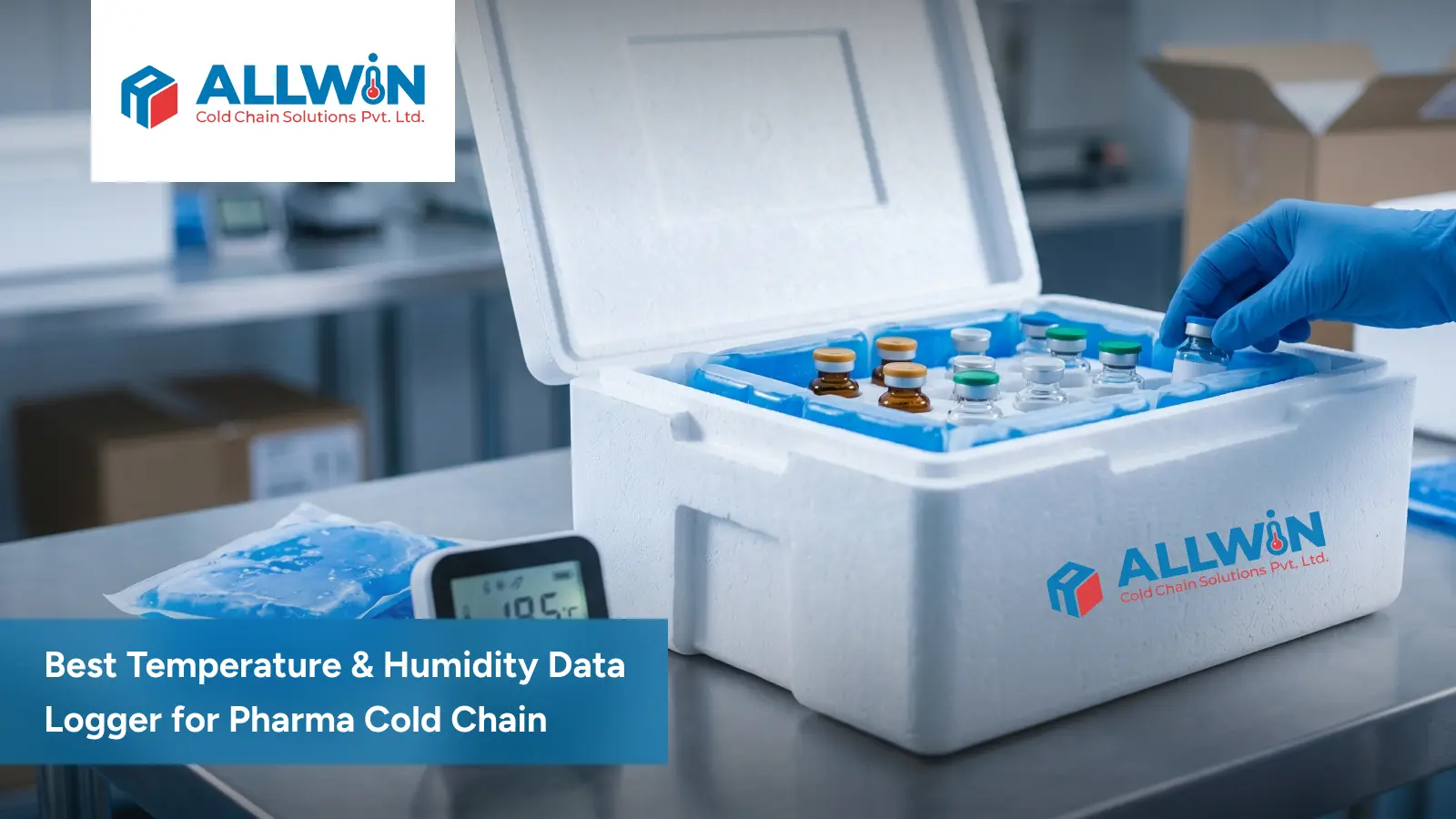
Nobody talks about the data logger. Seriously. You'll sit through hour-long cold chain reviews where everyone's debating insulation thickness, PCM pad specifications, truck refrigeration units, and warehouse temperature setpoints. The data logger, the small device that's actually recording everything, gets maybe two minutes at the end.
That needs to change. Because that device is the only objective record of what happened to your product between dispatch and delivery. Not what your driver thinks happened. Not what the warehouse team logged manually on a paper form at shift handover. What actually happened, minute by minute, at the sensor level.
If a power cut hit the Bengaluru cargo terminal at 11 PM and your insulin consignment sat at 14°C for four hours, the data logger knows. If a truck got stuck in traffic on NH-48 in the afternoon heat and the refrigeration struggled to hold temperature, the data logger knows. If a customs delay at Sahar airport pushed a 30-hour shipment to 52 hours, the data logger knows.
And if you don't have one? You find out later. Usually in the worst possible way.
A temperature data loggers is an electronic device that continuously records both temperature and relative humidity (RH) over a set period, stores that data internally, and lets you download and review it after a shipment completes. That's the definition. The practical reality is a bit more important.
When a pharmaceutical product, say a batch of live attenuated vaccines, travels from a manufacturing plant in Hyderabad to a district hospital in Assam, it doesn't just move through one environment. It passes through a cold storage facility, a cargo terminal, a truck, possibly a regional distribution warehouse, another truck. Temperature and humidity shift at every single handoff. A good pharma cold chain data logger captures all of it without relying on anyone to remember to check or write anything down.
Now, temperature is obvious. Everyone watches temperature. But relative humidity (RH) is the one that catches people off guard.
Hygroscopic medicines, those that absorb moisture from the air, degrade faster than their shelf life predicts when humidity is uncontrolled. Tablets crack or clump. Blister packs delaminate. Cartons warp. Labels peel off in humid conditions, turning a compliant shipment into a non-compliant one. And here's the one that surprises a lot of people: condensation inside a shipping box can look exactly like a temperature breach on initial inspection, even when temperature was perfectly controlled throughout. It's the humidity that caused it.
Read More: What Is a Data Logger? Types, Benefits & Cold Chain Uses
So the best temperature and humidity data logger for pharmaceutical use tracks both parameters simultaneously, not one or the other. You need the complete picture.
There are four main types in the market. They're not interchangeable, and buying the wrong one creates operational problems that are annoying at best and non-compliant at worst.
1. Single-use loggers are pre-programmed, compact, and built for one shipment. After delivery you download the data and dispose of the device. They're the right choice for high-value pharmaceutical exports, clinical trial samples, or any consignment where you want a tamper-evident, dedicated record that travels with the product and only that product. No on-site programming needed. Simple to use, easy to audit.
2. Reusable loggers can be reconfigured and deployed across multiple shipments. They make more economic sense for regular domestic routes or warehouse monitoring where the same device gets recalibrated and redeployed repeatedly. Higher upfront cost, but the per-shipment cost drops sharply over time.
3. USB loggers are straightforward. Plug into a computer, download the data, review the report. Reliable, widely used, no subscription or connectivity required. The limitation is obvious: you don't know what's happening during transit. You only know after the shipment arrives, by which point it's too late to intervene.
4. Wireless and IoT-connected loggers are different in a meaningful way. These transmit data in real time via cellular, Bluetooth, or Wi-Fi to a cloud dashboard, and they can push alerts the moment a threshold is crossed. For high-value pharmaceutical shipments or complex routes with multiple handoff points, real-time visibility changes what you can do. You can reroute, intervene, escalate. That's not possible with a USB logger.
For most Indian pharmaceutical logistics operations right now, a mixed approach makes sense. Wireless reusable loggers for regular domestic routes. Single-use loggers for export consignments or high-value shipments where you need an independent, self-contained record.
See Also: Cold Chain Logistics: Keep Temperature-Sensitive Products Safe
This section matters more than most people realise. The regulatory landscape around cold chain monitoring for pharmaceuticals in India has tightened significantly, and auditors are checking for specifics.
1. WHO GDP requires temperature-sensitive pharmaceutical products to be monitored and documented throughout the supply chain. Monitoring devices must be calibrated against a certified traceable standard at least once a year. Records must be available for inspection. "We use data loggers" isn't enough. The calibration certificate and the download reports need to be there when asked for.
2. FDA 21 CFR Part 11 applies if you're exporting to the United States or working with US-regulated products. Your data loggers need to generate electronic records that are audit-trailable, tamper-proof, and backed up. Many modern loggers come with 21 CFR Part 11-ready software, but verify this before purchasing. Not all loggers marketed as "pharma grade" actually meet this standard.
3. IATA Perishable Cargo Regulations govern air freight of pharmaceutical products. Loggers used on aircraft must be battery-powered, airline-approved, and technically compliant with IATA's specific requirements. If you're shipping through airports in Mumbai, Delhi, Hyderabad, or Chennai, and your logger isn't IATA-approved, it shouldn't be on the aircraft.
4. CDSCO and revised Schedule M under India's Drugs and Cosmetics Act mandate GDP compliance for all domestic pharmaceutical manufacturing and distribution. Temperature and humidity records are a standard audit requirement. Companies relying on manual paper-based logs are increasingly finding these don't hold up.
Learn More: What Are Temperature Control Solutions? A Complete Guide
Non-compliance in pharma isn't just a fine. It's a quality event, potentially a recall, and in serious cases, a risk to patients.
There are dozens of data loggers available. A lot of them are marketed with the same words. Here's what to actually evaluate.
1. Accuracy is the one you can't compromise on. For temperature, ±0.5°C or better. For humidity, ±3% RH is acceptable for most pharmaceutical applications; ±1% RH is the standard for critical biologics and vaccines. An inaccurate logger is genuinely worse than no logger. It gives you a false sense of compliance.
2. Temperature range matters depending on your product portfolio. Vaccines require 2°C to 8°C. Frozen biologics and certain cell therapies need -20°C to -80°C. Many standard medicines sit at controlled room temperature, 15°C to 25°C. The best pharmaceutical cold chain management – cold chain logistics cover -40°C to +85°C, which means one device type can serve multiple product categories without needing a separate logger for each.
3. Data storage and logging interval interact in a way people often overlook. A logger recording every 30 seconds generates 120 data points per hour. A logger recording every 5 minutes generates 12. For a 72-hour domestic shipment, the difference in storage requirement is substantial. For a 30-day international export, even more so. Check that the device has enough storage for your longest expected transit before deploying.
4. Battery life is straightforward but often underestimated. For domestic Indian shipments of 24 to 72 hours, most devices are fine. For international exports that can run 5 to 30 days, you want battery life of at least 90 days with margin. Don't cut this close.
5. Alert functionality separates reactive from proactive cold chain management. If a temperature breach triggers an immediate alert, you may still be able to do something about it. If you discover it at delivery, all you have is documentation of the failure.
6. Compliance certifications aren't just for show. IATA approval for air freight, 21 CFR Part 11 compatibility for US exports, calibration certificate from an accredited lab, GDP compliance documentation. Your quality team will ask for these. International clients will ask for these. Have them ready.
7. Ease of use gets underweighted in product evaluations. A technically excellent logger that warehouse staff consistently use incorrectly fails at its actual purpose. Simple start/stop, a readable real-time display, and data download software that generates clean PDF or Excel reports without requiring training matter in practice.
1. Vaccine cold chain is the most demanding application. WHO estimates close to 50% of vaccines are wasted globally every year because of temperature management failures. A few hours above 8°C can completely destroy a batch of live attenuated vaccines. And there's no way to tell by looking at the vial. It looks fine. The potency is gone.
In India, the vaccine cold chain runs from national cold stores to state-level warehouses to district cold rooms to primary health centres in Ladakh, the Sundarbans, and remote blocks of the Northeast. A data logger provides the accountability thread across every leg. That thread is also what immunisation programme audits check for.
2. Temperature sensitive medicine storage in warehouses and cold rooms is a parallel use case. Insulin, monoclonal antibodies, blood products, certain antibiotics, and a growing list of biologics all need continuous monitoring. If a refrigeration unit fails at 3 AM, a wireless logger sends an alert. A USB logger tells you what happened when someone checks it in the morning. For a warehouse full of high-value biologics, the difference between those two scenarios is significant.
3. International pharmaceutical exports from India, generics, APIs, vaccines to over 200 countries, travel by air and sea through multiple customs stops, sometimes for 30 days or more. A data logger on each consignment gives the shipper, receiver, and regulatory authorities a verifiable record. Without it, you have no evidence base when a receiving party raises a quality complaint.
4. Clinical trial sample transport is an area where there's very little tolerance for error. Biological samples collected from trial participants are irreplaceable. Degraded samples mean lost data, protocol deviations, and in some cases, entire study arms having to be repeated. Temperature loggers for laboratory sample shipments need to be accurate, compact, and compliant with both the carrier's requirements and the trial sponsor's monitoring protocols.
India's cold chain challenge is genuinely unlike most other markets. The ambient temperature in Rajasthan in May can hit 48°C. Himachal Pradesh in January sits below -10°C. A pharmaceutical shipment from a manufacturing plant in Ahmedabad to a rural health centre in Nagaland might travel by refrigerated truck, domestic air freight, and road transport again, across three or four distinct climate zones, with three or four handling transitions between them.
Temperature controlled logistics in that environment requires more than good packaging. It requires documentation of what actually happened at every step.
India's cold chain infrastructure has improved meaningfully over the past decade, and the COVID-19 vaccine programme pushed a significant jump, requiring the largest cold chain mobilisation in the country's history. But last-mile delivery gaps remain, particularly in Tier 3 and rural geographies. The pressure on data loggers is higher, not lower, in those final legs.
The demand for reliable cold chain data logger suppliers in India has grown alongside this. Pharmaceutical companies across Gujarat, Hyderabad, Pune, and the pharmaceutical manufacturing corridor in Baddi, Himachal Pradesh are moving away from manual paper logs. Partly because paper doesn't hold up in international audits. Partly because the inaccuracy of manual recording creates quality risks that the business can't afford.
Regulatory pressure is reinforcing this shift. India's pharmaceutical export targets, backed by the PLI scheme and BioE3 policy, mean manufacturers increasingly need US FDA, EU GMP, and WHO prequalification compliance. All three require verifiable temperature monitoring records. That's now a market access requirement, not just a quality one.
Allwin Cold Chain Solutions, based in Gandhinagar, Gujarat, works from a straightforward position: the integrity of a temperature-sensitive pharmaceutical product depends on every link in the cold chain holding. Not most of them. All of them.
That's why Allwin doesn't sell data loggers in isolation. Their cold chain monitoring devices are built to work as part of an integrated system alongside Allwin's insulated packaging range, PCM chill pads, single-use courier shippers, reusable shippers, and pallet shippers. The combination means your product isn't just physically protected against temperature excursions. It's being monitored throughout its journey, with a clean record that your quality team and auditors can actually use.
Allwin's cold chain monitoring devices offer continuous temperature and humidity recording during both transit and storage; compact, portable form factors suited to pharmaceutical shipments from courier parcels to full pallet loads; USB data download with clean, audit-ready PDF and Excel reports; and documented compliance support for WHO GDP, CDSCO, and IATA requirements. Local support from a team that understands Indian pharmaceutical logistics, not just the general cold chain market, is part of the offering.
The distinction Allwin makes as a cold chain data logger supplier in India is integration. A logger records what happened. A logger paired with the right insulated packaging, the right PCM pads calibrated to your product's specific temperature range, and the right reusable shipper designed for your route actually prevents excursions from happening in the first place. That's the difference between monitoring a problem and managing it.
Allwin works with pharmaceutical manufacturers, logistics providers, hospitals, and research laboratories across India. Vaccine distribution to rural health centres in Bihar, API exports to European Union buyers, clinical sample logistics for research organisations. The solution is built to the specific requirement, not a standard configuration.
At Allwin Cold Chain Solutions, the approach is integration. Data loggers paired with the right insulated packaging and PCM chill pads, calibrated to your product's specific needs, backed by local support that understands how Indian pharmaceutical logistics actually works.
If you're looking for a cold chain data logger supplier in India that understands the pharmaceutical industry, not just the hardware, reach out to Allwin Cold Chain Solutions. Let's build a cold chain your auditors can trust.

© Copyright 2026 Allwin. All Right Reserved