


2026-11-12
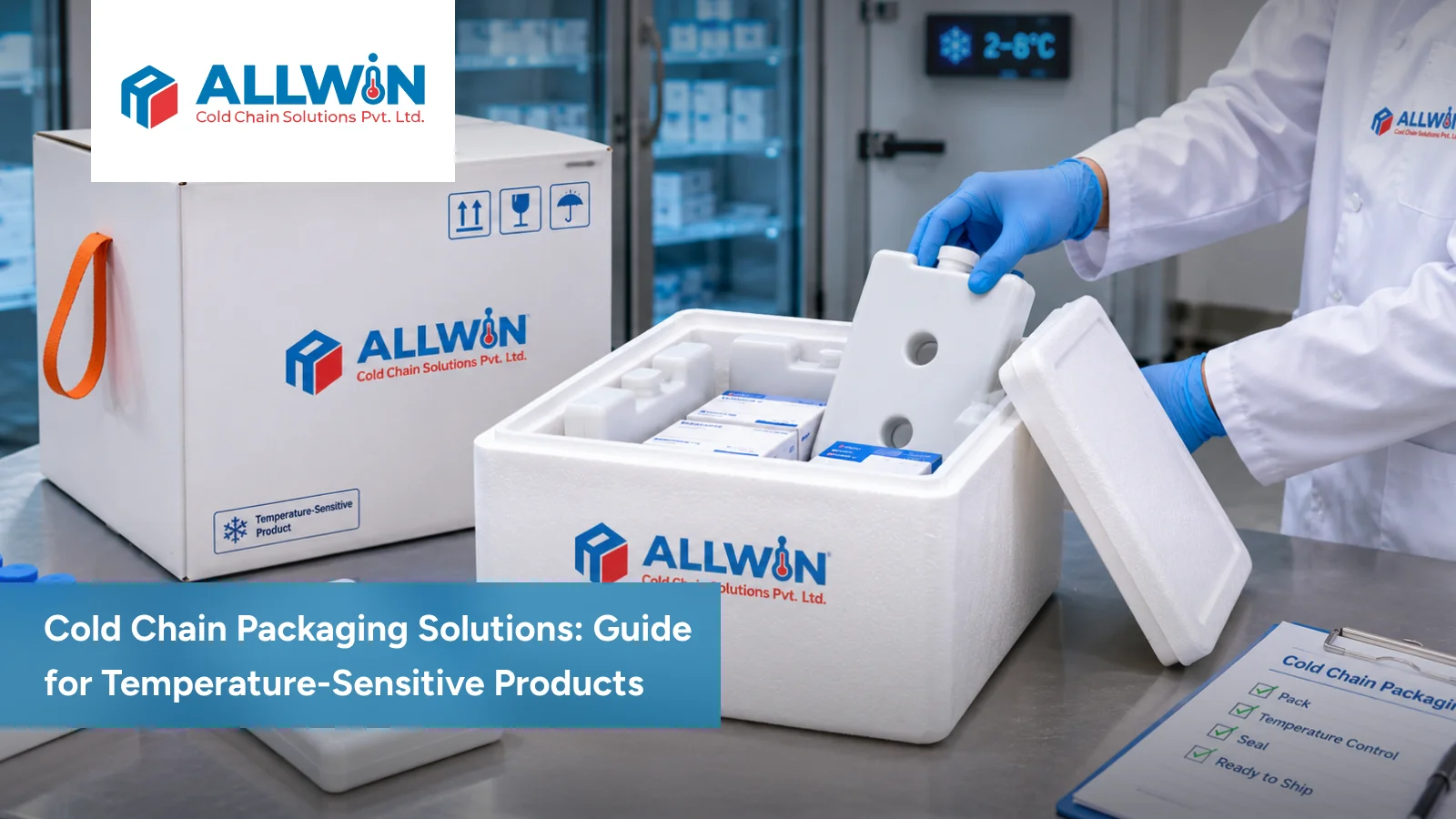
Some products are completely ruined by a few hours at the wrong temperature. Vaccines, biologics, fresh food, diagnostics etc can all arrive completely useless with no obvious sign of anything having gone wrong. That’s where cold chain packaging solutions come in. The right cold chain packaging will keep your product in its safe temperature range from dispatch to delivery, protecting the product’s quality, safety and compliance. For those of you on a regular route, reusable cold chain boxes are a cost effective and waste reducing option that will still keep your product cold. This guide looks at what cold chain packaging is, the different types and temperature ranges available, how to select the right one and how to ensure it actually works.
Cold chain packaging is not a single item. It’s a system of insulation and coolant working in conjunction to maintain the cold from the point of origin to the point of consumption.
An ordinary box will protect against knocks. Cold chain packaging will protect against both heat and cold, maintaining a stable internal temperature regardless of the weather outside.
The system does three things:
Together, those make up effective insulated packaging solutions and reliable temperature control solutions for transporting temperature-sensitive products.
There is no one size fits all when it comes to packaging. The right type of packaging will depend on the temperature the product requires, the length of the journey and whether or not the packaging is to be returned. Here’s a comparison of the main options.
| Packaging Type | Typical Use | Temperature Range | Best For |
|---|---|---|---|
| Single-use packaging | One-way export shipments | Chilled to frozen | Routes where the box will not return |
| Reusable cold chain boxes | Repeat, closed-loop routes | Set by PCM pad used | Regular lanes, lower cost per trip |
| VIP shippers | High-value, sensitive loads | Tight, precise ranges | Pharma and biologics |
| PCM cooling pads | Paired with any insulated box | 0°C, +5°C, +18°C, -16°C, -22°C and more | Holding a precise set temperature |
Allwin’s PCM cooling pads come in 6 phase change points and 10 sizes so the coolant can be matched exactly to the product. They’re temperature controlled packaging solutions for chilled, frozen and controlled ambient applications. Paired with PCM pads, the reusable boxes also work as temperature controlled shipping containers for closed-loop routes.
Choose wisely and match the pack to your actual shipment rather than some generic spec. A couple of honest questions and you’ll be sorted.
Answering these questions will help you select the right cold chain packaging for temperature control and identify the most suitable cold chain shipping solutions for your requirements.
Good packaging still fails under bad handling. The box only works if the process around it is right. Most of the excursions are down to a missed step rather than a bad product.
The habits that protect a shipment:
Do this every time and the packaging will perform as it was designed to.
Even good packaging is going to face a harsh environment. You can only really plan around the problems you know about. The vast majority of failures are down to the gaps that nobody owns.
A connected system, packaging plus coolant plus monitoring, is what keeps these risks in check.
Packaging validation is not the same as checking what’s in the packaging. Cold chain testing and validation is the process that confirms that the packaging will work before products are placed in it. This is especially critical when dealing with regulated products.
How to confirm that the packaging works:
Allwin provides testing and validation as well as lane simulation so your packaging can be proven before it actually carries your product.
Allwin designed and supplied complete cold chain packaging solutions rather than just the box. The box, the coolant and the monitoring are all designed and specified by the same supplier so the whole package is built to perform as one. That’s an approach which has come from many years of experience in the PUF insulated packaging field.
What Allwin offers:
Allwin cold chain solutions serve diverse clients, whether it’s from pharma to the e-commerce sector; we provide our services diversely. Allwin is a Gandhinagar, Gujarat-based supplier specializing in packaging that can also be customized according to your requirements.
Cold chain packaging is an entire process that ensures the delivery of temperature-sensitive materials safely and securely between producer and consumer. It goes beyond simple packaging and cooling blocks to become a method of temperature and humidity protection throughout the whole route. When all elements of the cold chain are implemented properly, the package arrives at the destination intact, compliant, and on time. When it goes wrong, however, in most cases, you won’t even notice that. Companies that manage to get it right see cold chain packaging as a cohesive system rather than as merely a bunch of components. They select cooling materials taking into account temperature, pick the suitable package size for payload, and monitor the shipment throughout the whole supply chain. Whether you are shipping medicines, food, or diagnostic samples, using the right cold chain approach is proven to minimize your risks.


© Copyright 2026 Allwin. All Right Reserved